MUSEUM AT RUGBY RELICS HOME  -  WORLD-RUGBY-MUSEUM HOME

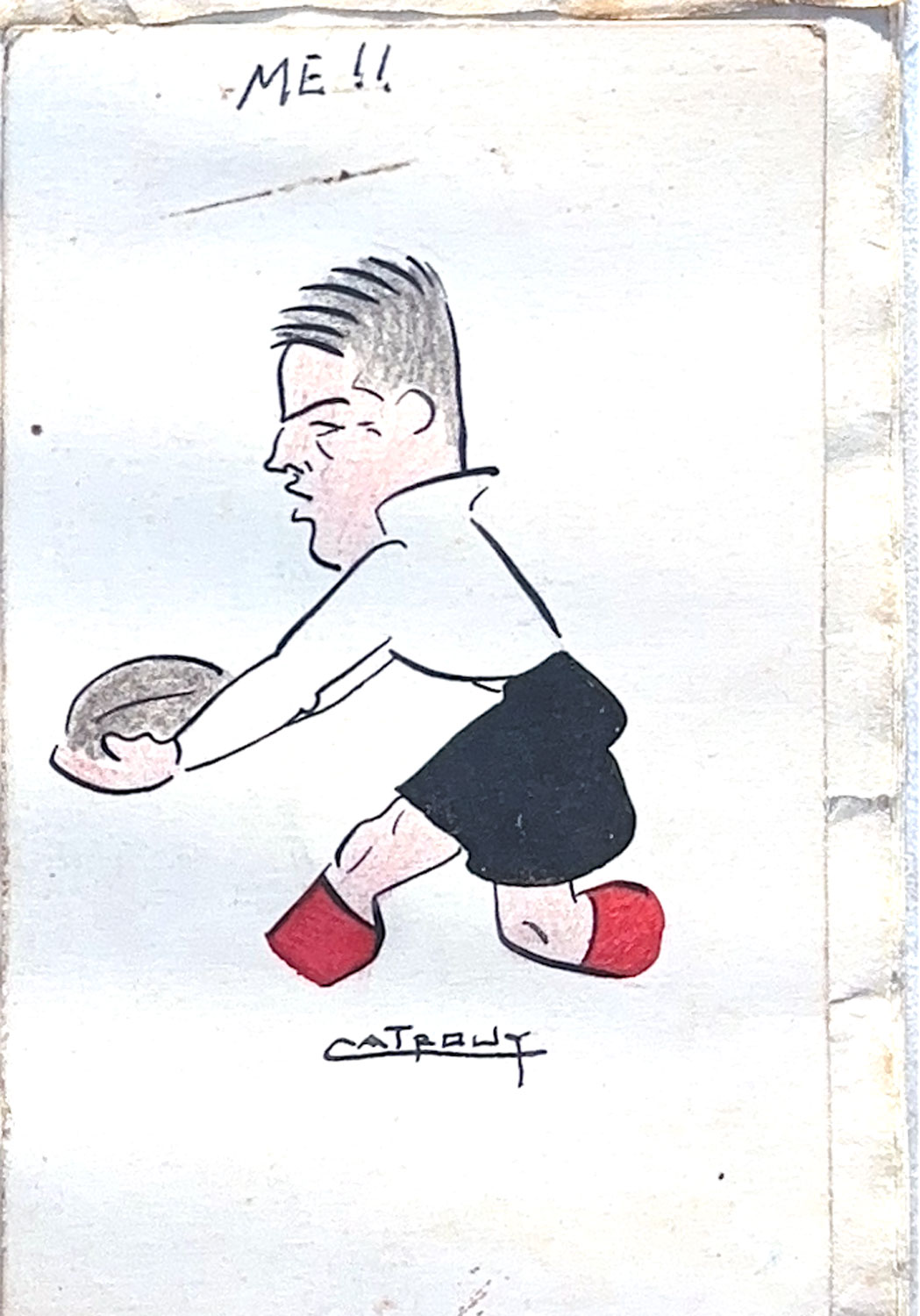
JC Benson - John Cowin Benson known as Jack

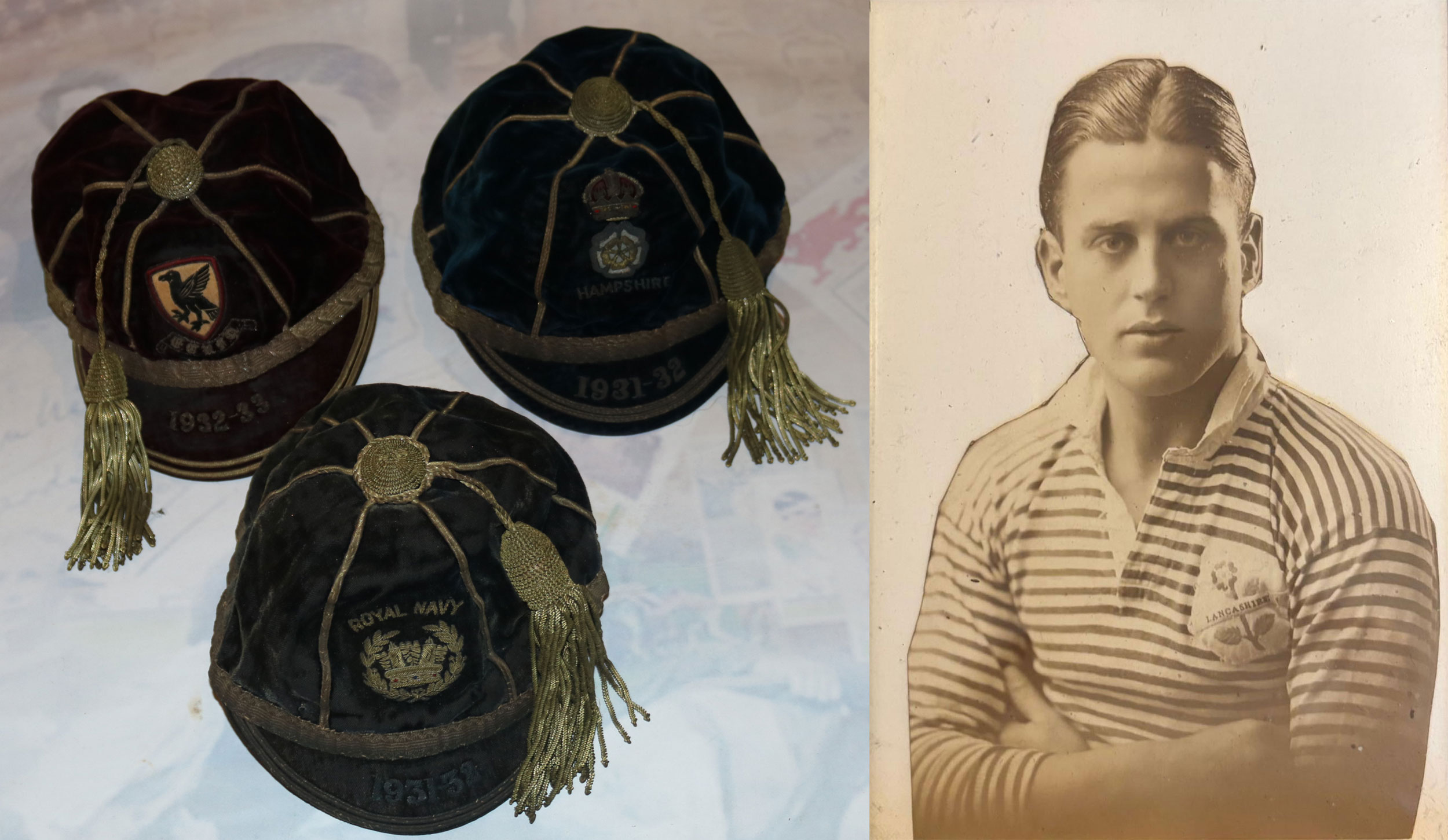
Honours cap collection

WRM-1089-clcpgp3-benson
BIOGRAPHY  -  COLLECTION  -  ARCHIVE  -  ACKNOWLEDGEMENTS

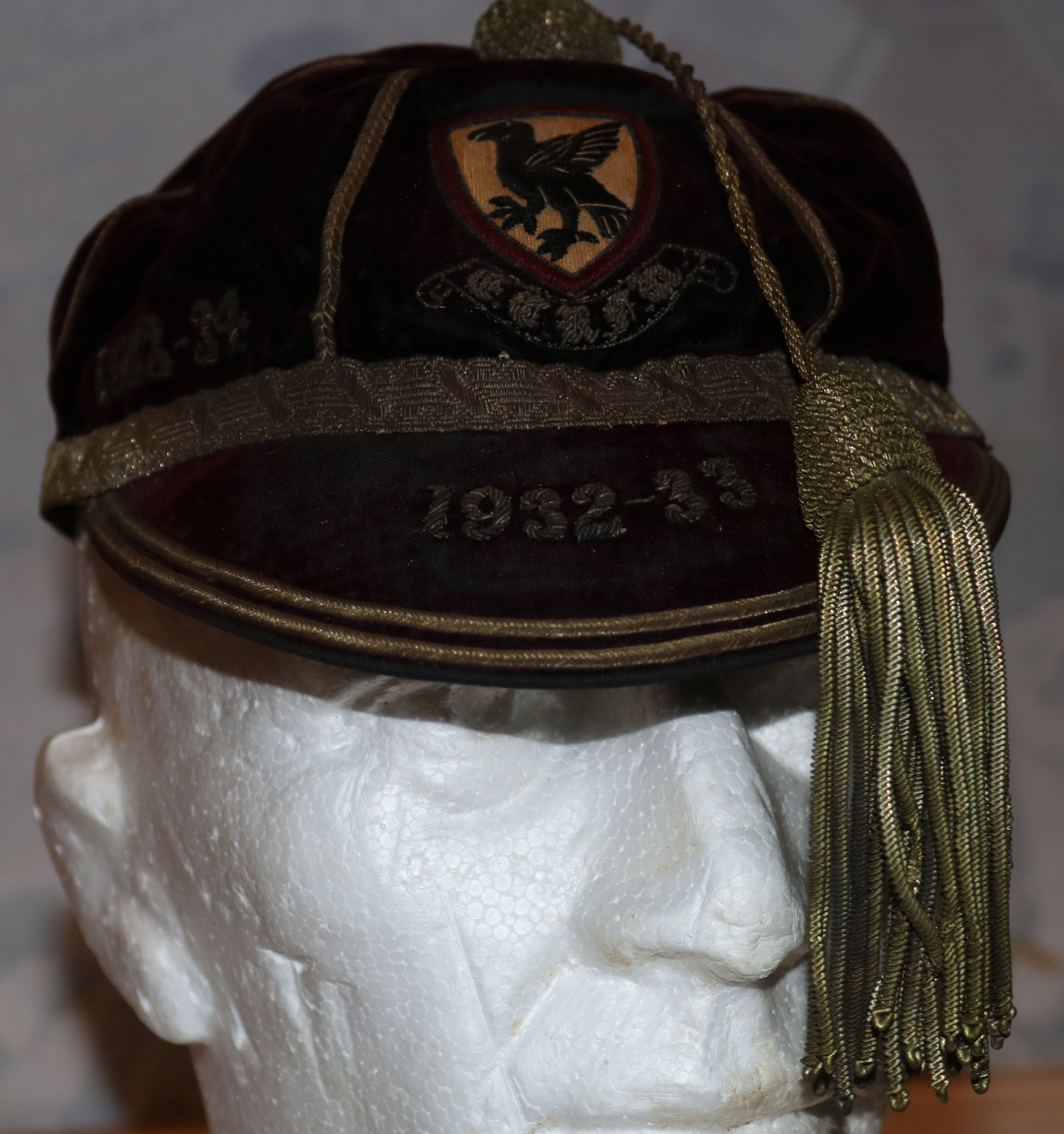
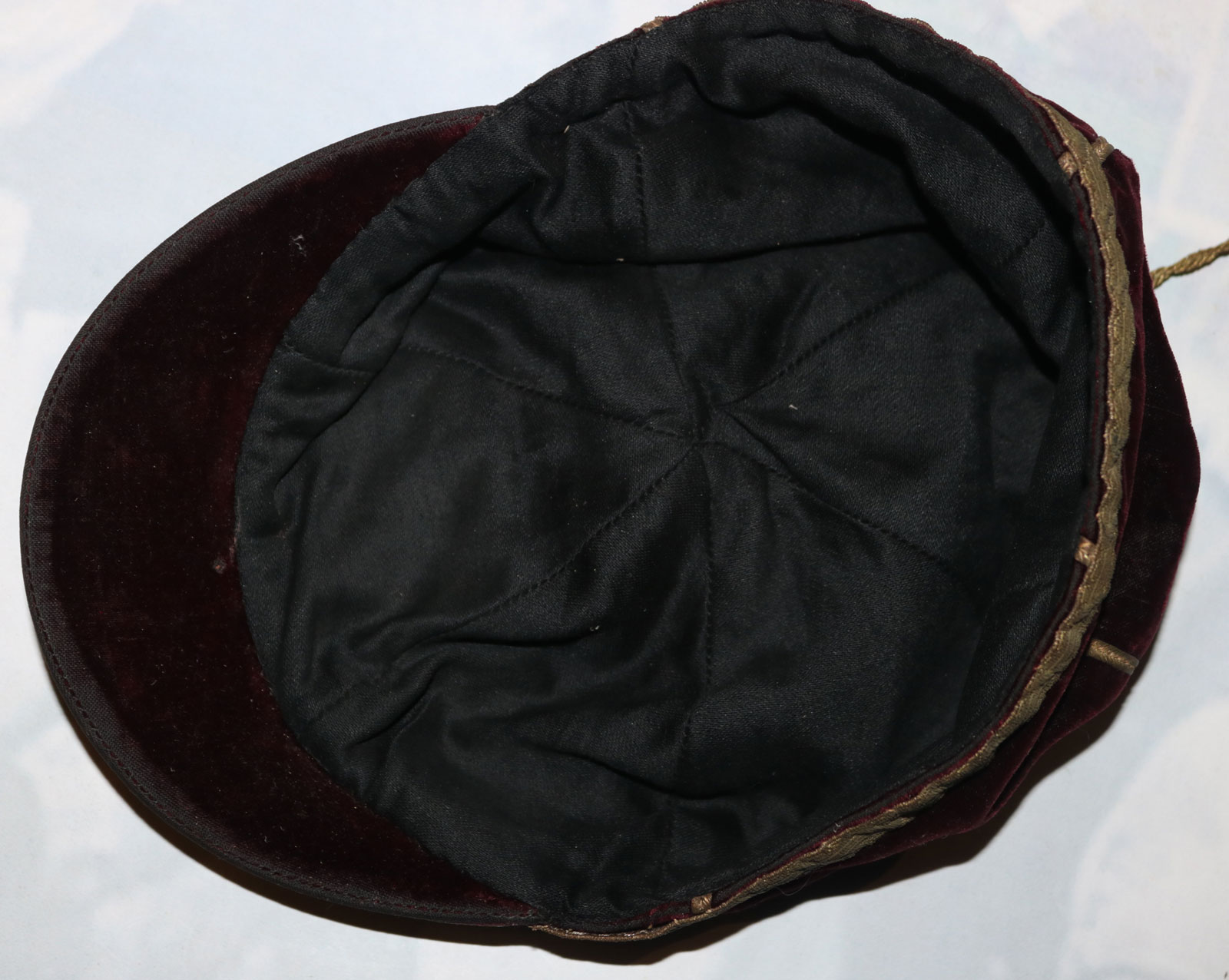
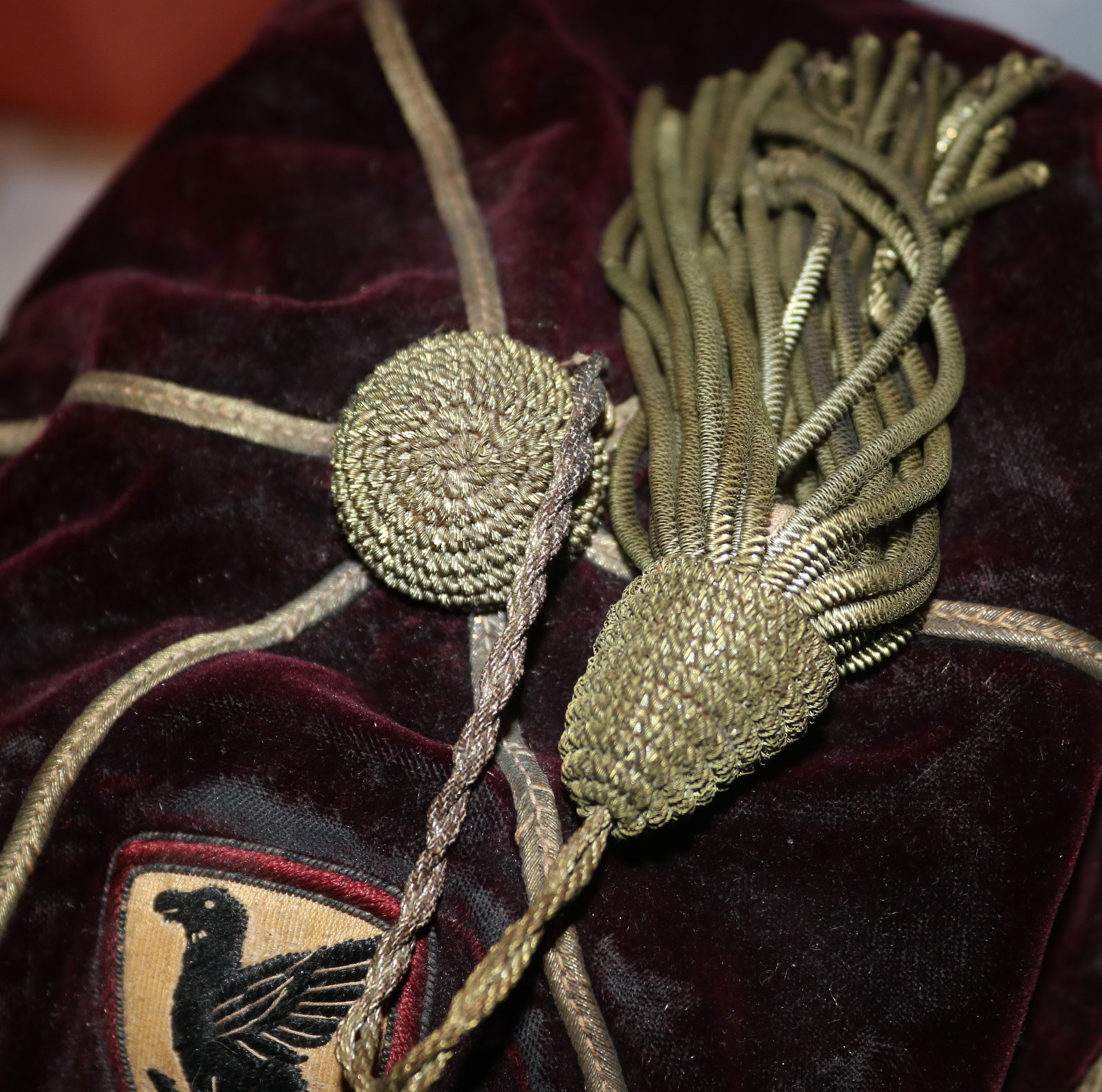
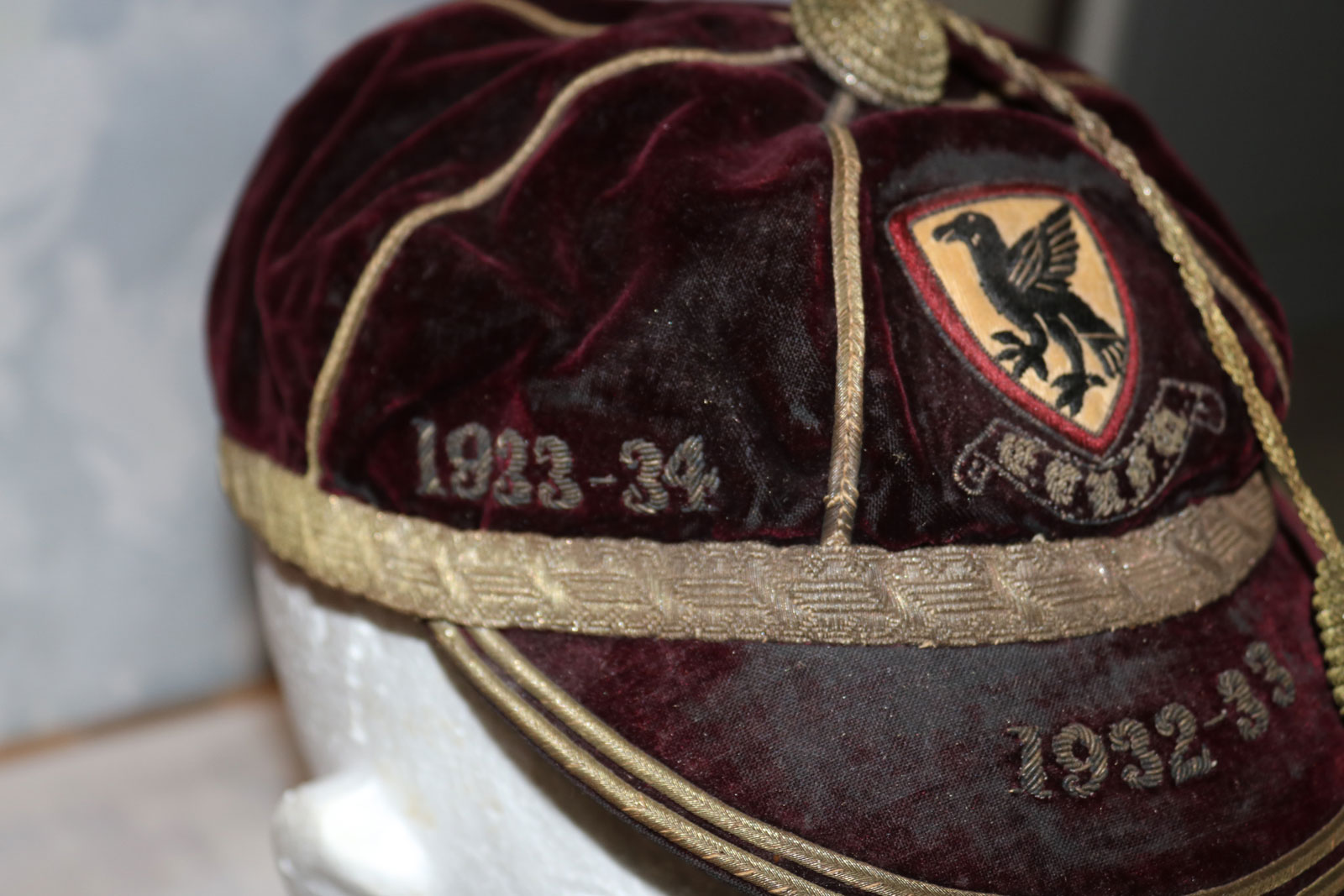
25.jpg (399136 bytes) 09.jpg (320566 bytes) 14.jpg (441150 bytes) 18.jpg (320803 bytes)

John Cowin BENSON (1906-1985) - text by John Griffiths

They say there is no new thing under the sun, but it might surprise a few rugby enthusiasts to learn that nearly a hundred years ago there was an Englishman who sacrificed the opportunity to win an England rugby cap by playing in France.

Today rugby union is an established professional sport. England-qualified players make the French connection for mainly financial reasons, knowing full well that they almost certainly jeopardise their chances of international selection. But in the amateur days of the 1920s a prominent rugby player choosing to go abroad was more likely to miss out on national honours only because he was out of sight and therefore out of mind.

J.C.Benson – sportsmen were defined by their initials rather than their given names then – was a case in point. One of the best all-round sportsmen to come out of the North-West between the wars, he went off to Tarbes to broaden his dentistry skills just as he was reaching the peak of his rugby union career as a centre threequarter.


John Cowin Benson was born in Barrow-in-Furness on 3rd September 1906. The son of a pharmacist, he was educated at Barrow Grammar School where he played both rugby codes as well as soccer, though it was as an inside forward at the round-ball game that he excelled before going up to Liverpool University to study dentistry in 1924.

Indeed, his early sporting marks at University were made on the soccer fields, tennis courts and cricket pitches, winning colours at all three sports before taking up rugby union at the start of his third year. He showed a natural aptitude for the game, possessing a deceptive turn of speed and a sharp eye for an opening, and made an instant impact in a successful University side. With his reputation spreading quickly, he was soon recruited by Waterloo, one of the top local clubs, and fast-tracked into the Lancashire side for county championship matches while still a student.


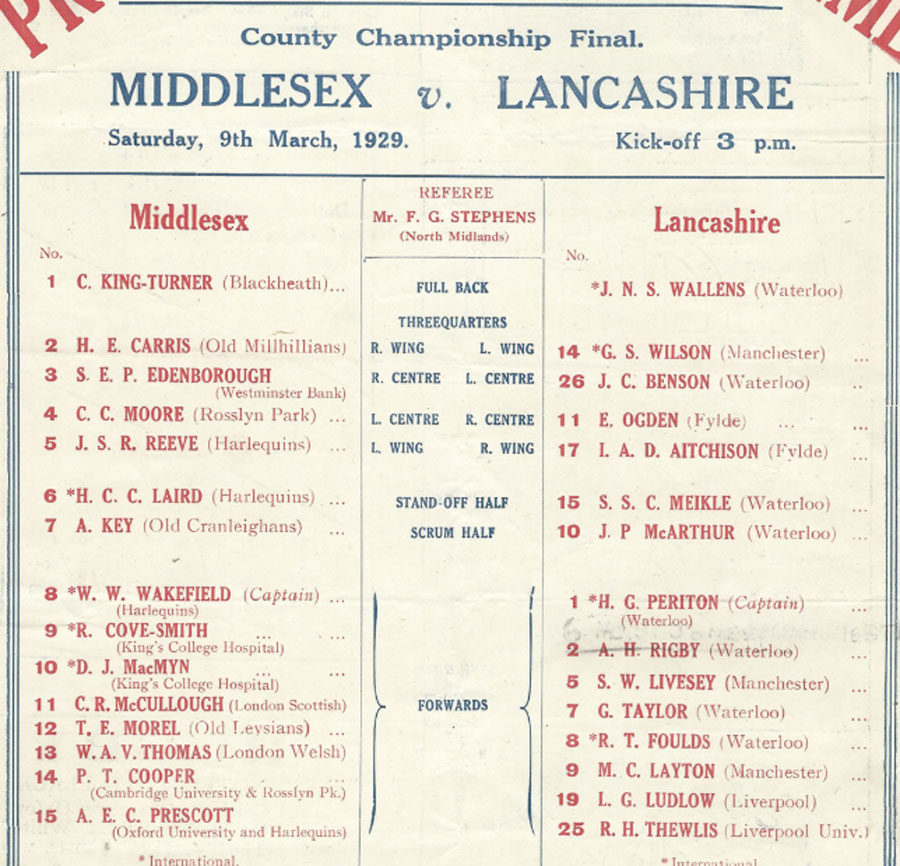
The red-rose county was always a dominant force on a circuit that, in its heyday of the 1920s, was seen as the proving ground for England’s up-and-coming talent; the immediate stepping-stone to a cap. In the spring of 1929, having qualified as L.D.S. with the highest marks of his year, and recently appointed house surgeon at Liverpool’s Royal Dental Hospital, he was a mainstay of the county’s back division when they reached the tournament final against a Middlesex fifteen led by Wavell Wakefield. The match was staged at Twickenham where two evenly-matched sides fought out an 8-all draw....................


..................... warranting a replay at Blundellsands. There, on Waterloo’s club ground, JC scored the second-half try that led to a tight finish in which Middlesex pinched the title, winning by the slender margin of 9-8. Praise for JC’s nifty skills was unstinting however, and many critics confidently predicted that he would be a shoo-in for the England trials when preparations for the 1929-30 Five Nations began.


But then he was gone. In the summer of 1929 he departed to Tarbes in the French Pyrenees, where he chose to extend his dentistry experiece by learning French methods at the town’s leading practice and became a fluent French-speaker.

Inevitably he turned out for the local rugby club in his leisure time, and in his second year there captained a side that included a couple of French international players. A highlight of his season at the helm was taking his team to North Africa for the centenary celebrations of French Algiers. But his best chance of an England cap had passed.

By the late 1920s, issues regarding the administration of French club rugby were troubling the blazers in the home unions. Suspicion that payments were being made to players in the French club championship, and the brutality and intensity that were often features of its big games prompted concerns that rugby’s then much-cherished amateur principles were being compromised.

Not that JC’s standing in the game was ever in question. René Crabos, a leading light in French rugby who was a former French captain and who would later become president of the French rugby federation, paid him generous tribute. Deploring the roughness rampant in French rugby, M.Crabos referred to JC’s sportsmanship as “a good example of how the game should be played. [His] is the true game, but a lot of French players still ignore it.”


With the writing clearly on the wall, in early 1931 the home unions declared a break in ties with the French federation. Whether that announcement had any influence on JC’s career decision-making is unknown, but soon after he was back in England and had joined the Royal Navy, taking up a postion as Surgeon-Lieutenant at the Royal Naval Hospital, Haslar, in Gosport, Hampshire. It was a move that would set him up for life.

For the short term it would also enable him to play first-class rugby in England again. Bennie Osler’s Springboks toured in the winter of 1931-32 and when they met the Combined Services at Twickenham JC was in the team. He lined up at centre at the shoulder of outside-half Douglas Bader who became a Second World War flying ace, but their efforts and those of no fewer than nine past or future international players were no match for an outstanding South African team.

As a result JC was passed over for international consideration. While he had been in France a new generation of skilful midfield contenders had come to the fore. Now he would have to stand aside and watch as Ron Gerrard, John Tallent and, later, Peter Cranmer and Peter Candler occupied the midfield spots in England sides that during the 1930s won two Triple Crowns and registered a famous 13-0 win over the All Blacks. What rugby honours, one wonders, might JC have enjoyed but for that French interlude?


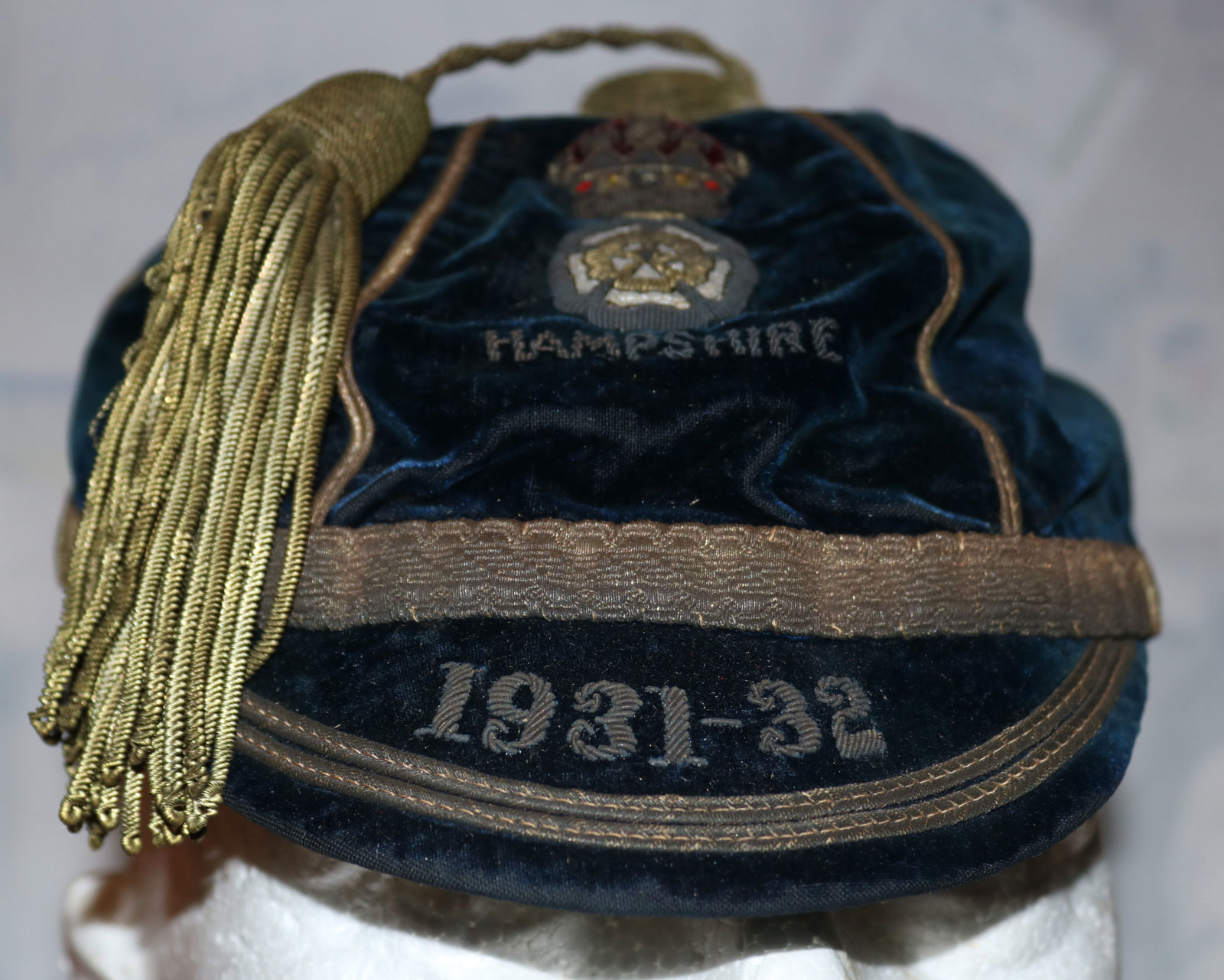
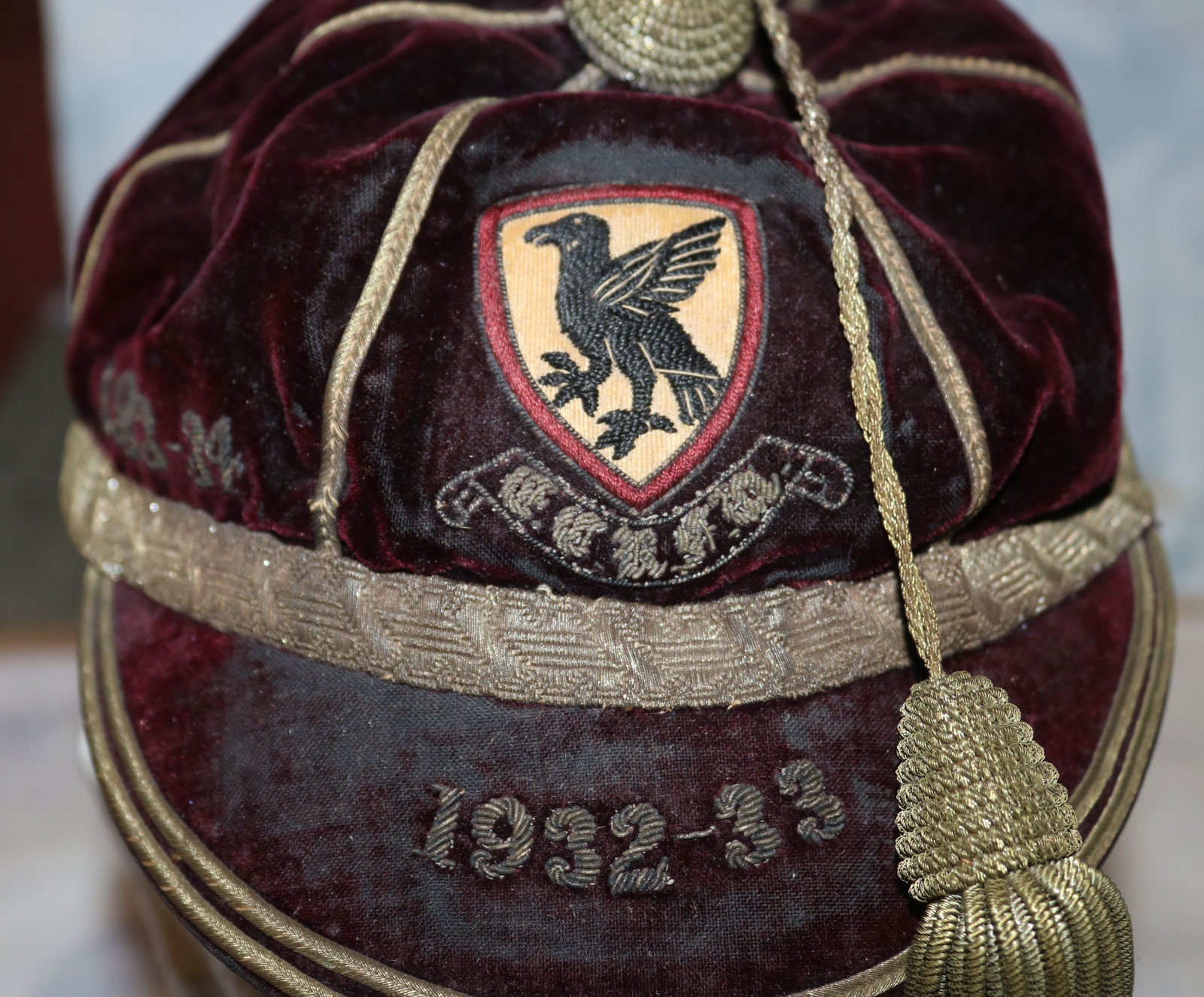
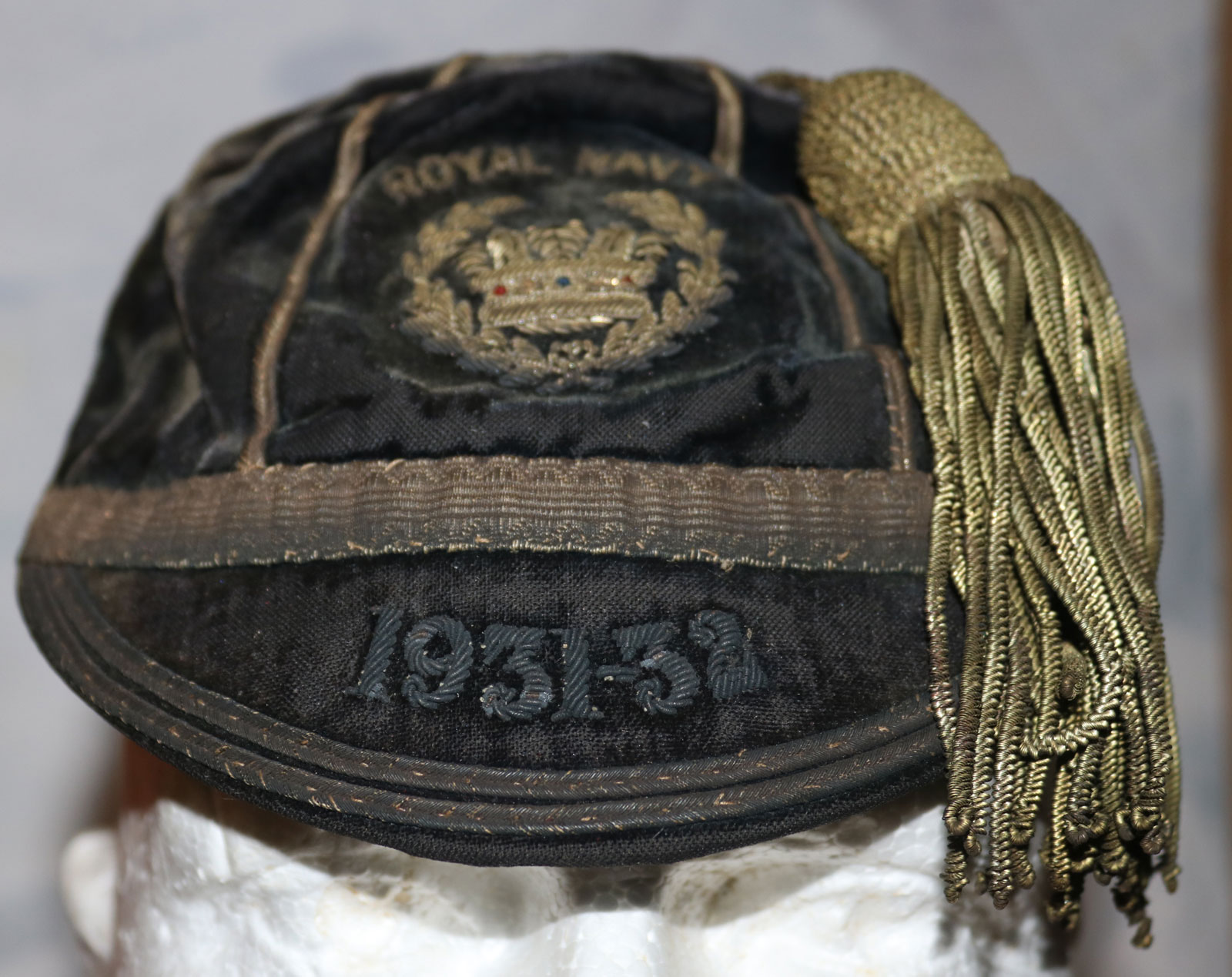
Even so, he continued to enjoy his rugby, representing the Royal Navy in the Triangular tournament and still playing on the county scene, with Hampshire and Eastern Counties (under the leadership of 1930 Lion and future England captain Doug Kendrew). Throughout his naval playing days he was a loyal member of the United Services (Portsmouth) club side, while in the course of duties overseas he often figured prominently in rugby tournaments in far flung lands. He retired from playing in his early thirties and after marriage in 1937 his sporting activities became confined to the more sedate pace of the golf course, where he represented the Navy in tournaments until long after the war.

He lived out his retirement in rural Hampshire and died at Droxford on 4th August, 1985, a month short of his 79th birthday.


COLLECTION

cap collection 25.jpg (399136 bytes) 23.jpg (411562 bytes) group photos
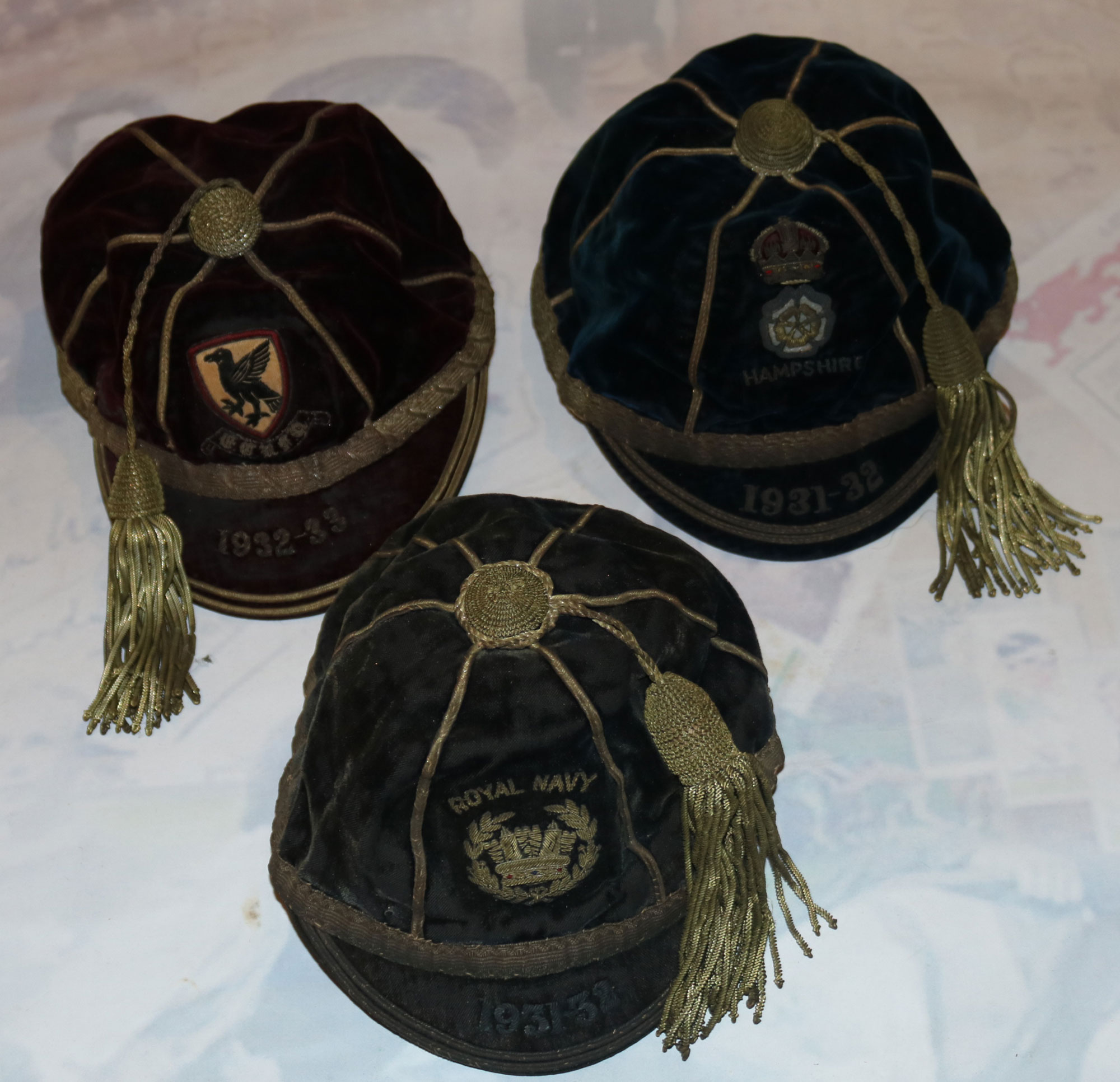
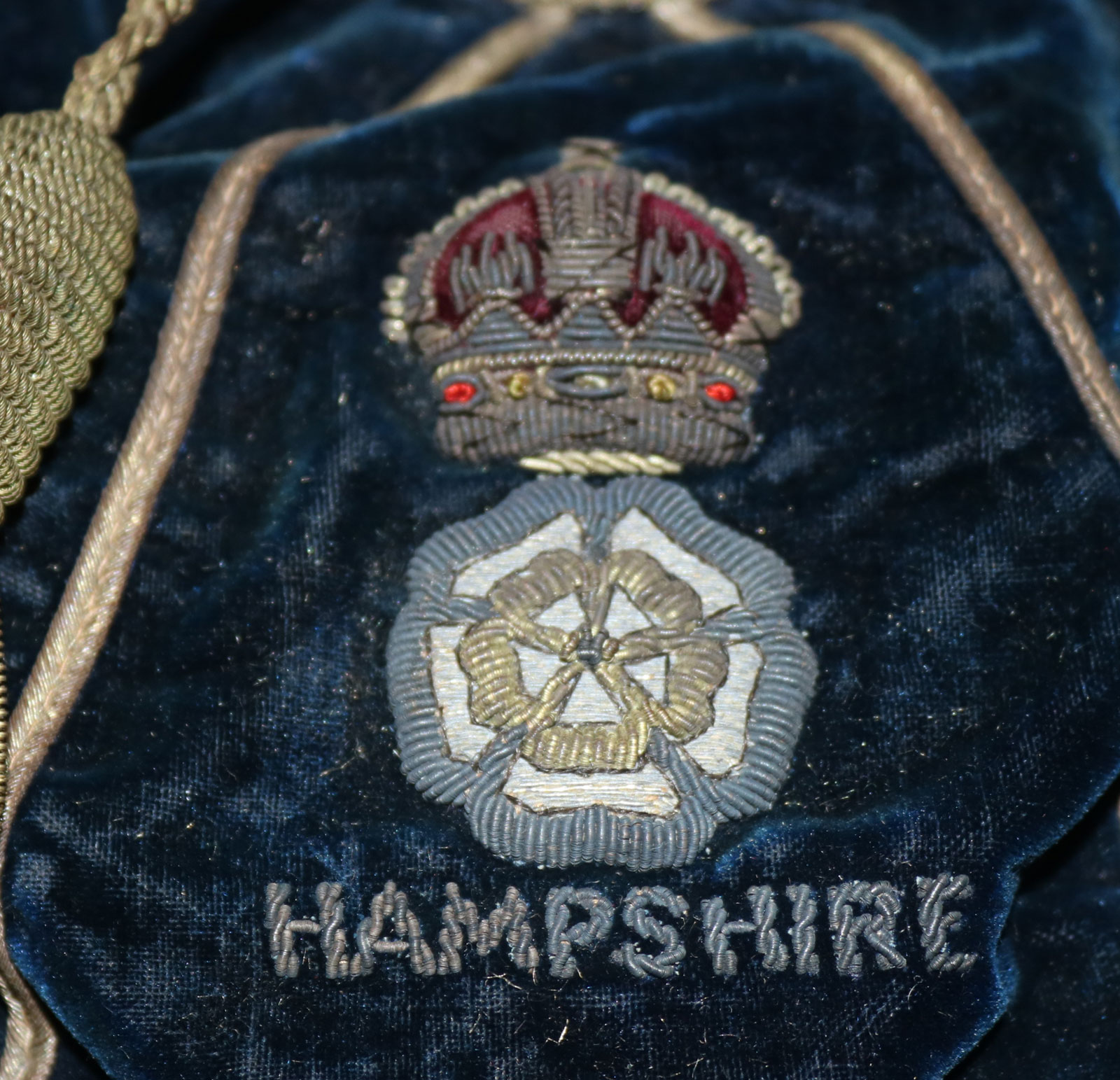
Hampshire 1931-32 09.jpg (320566 bytes) 12.jpg (148100 bytes) 11.jpg (361302 bytes) 10.jpg (430580 bytes)
Eastern Counties 1932-33 14.jpg (441150 bytes) 13.jpg (352827 bytes) 17.jpg (241570 bytes) 16.jpg (469527 bytes) 15.jpg (234355 bytes) 
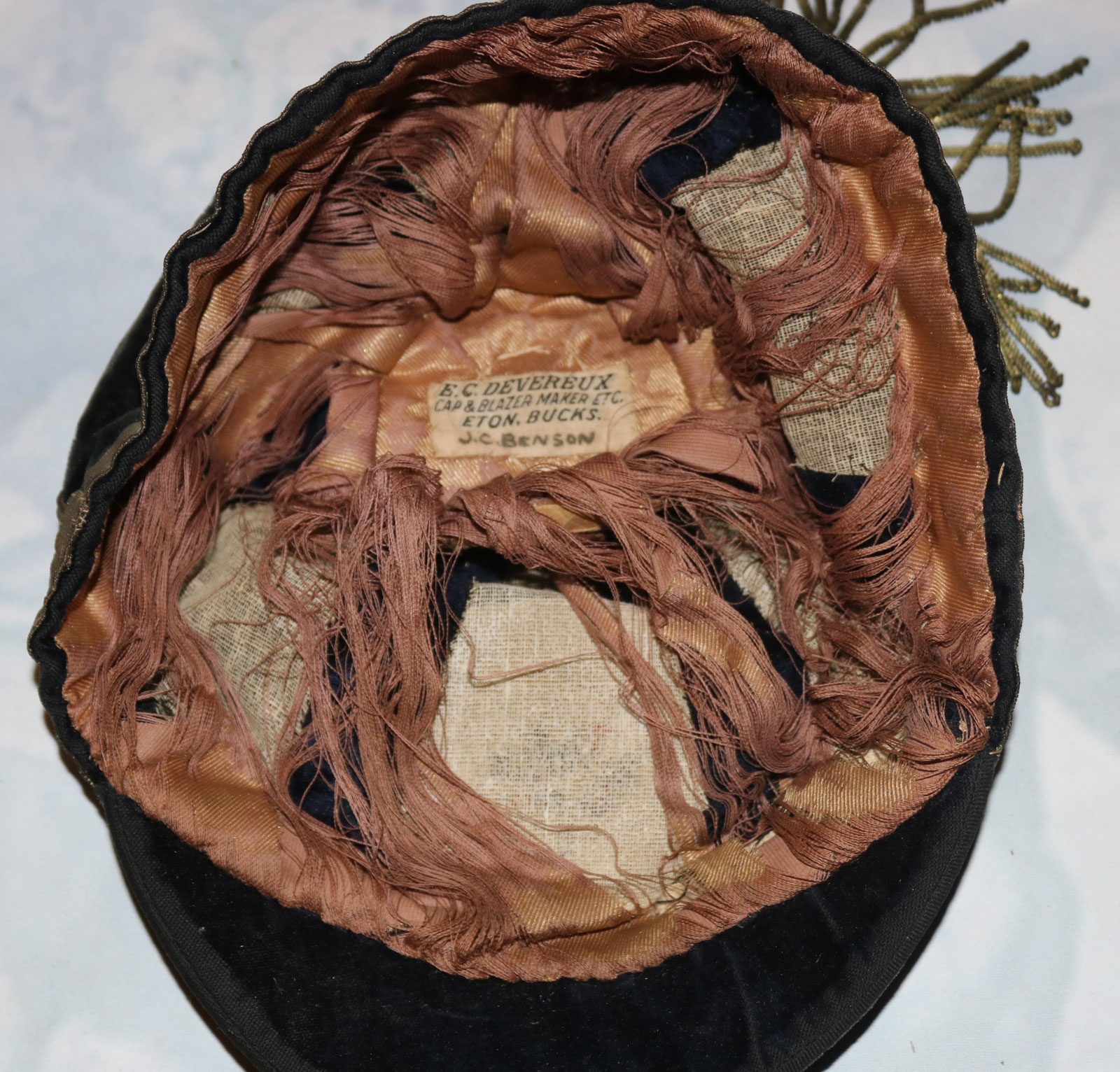
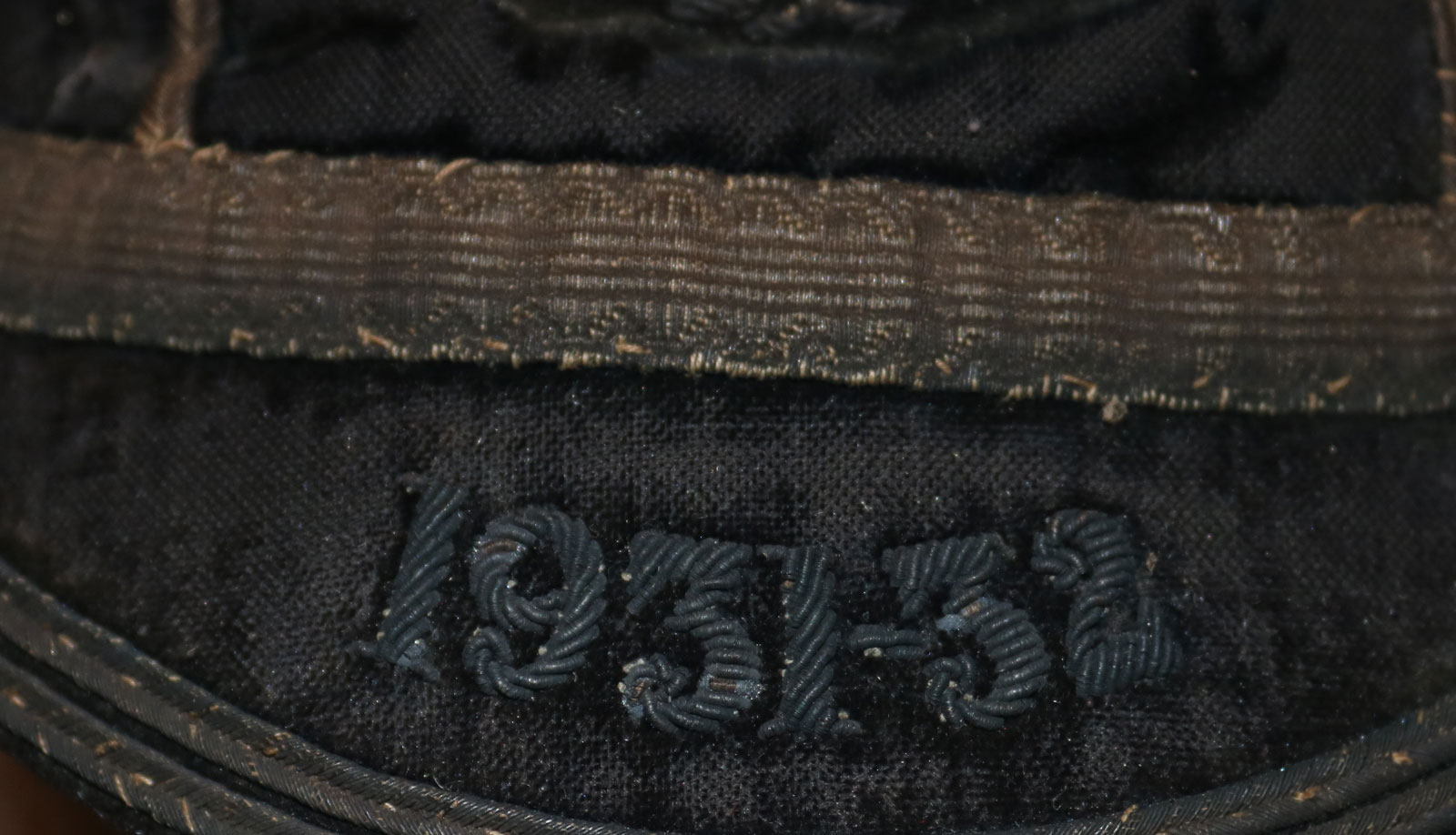
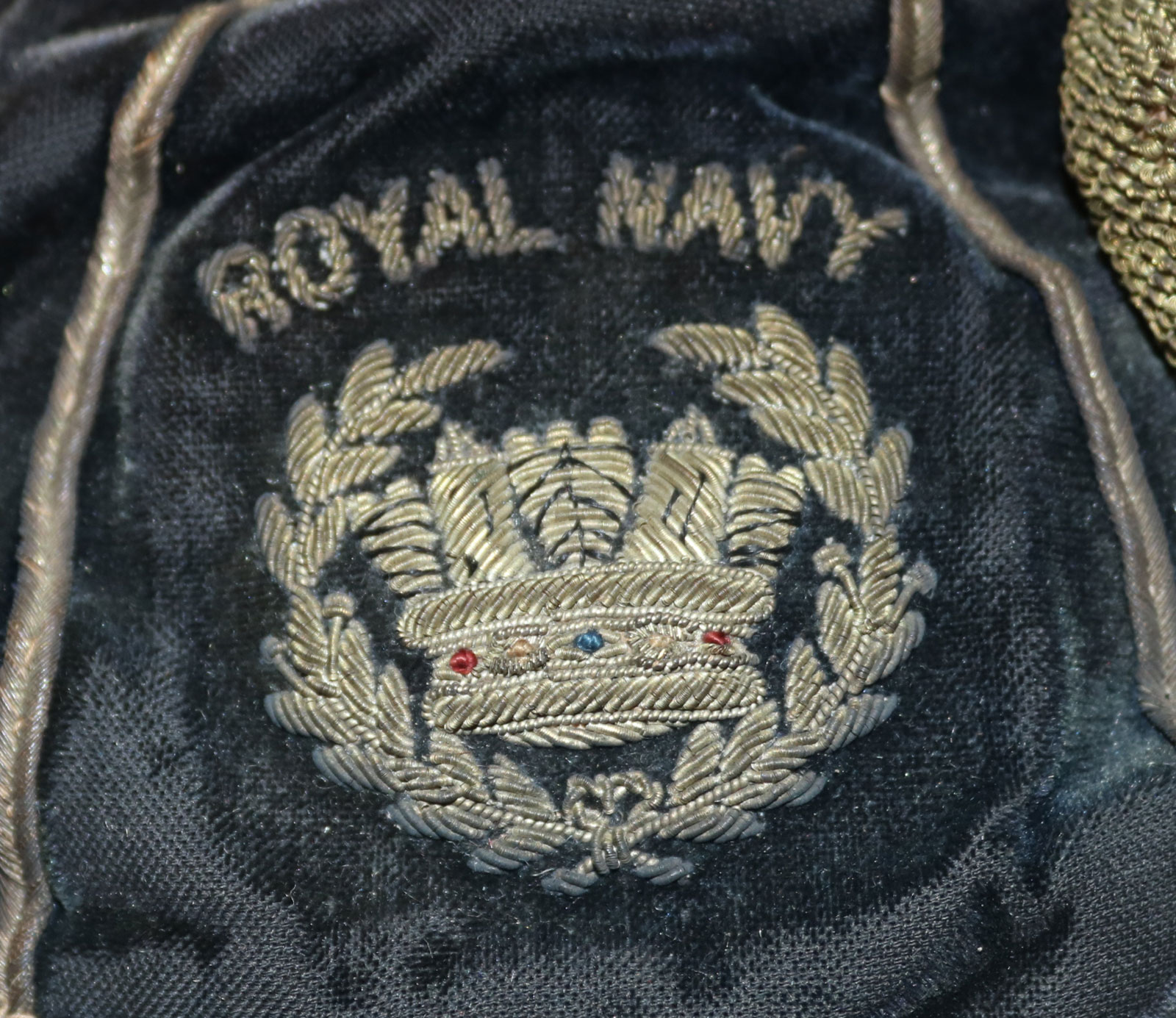
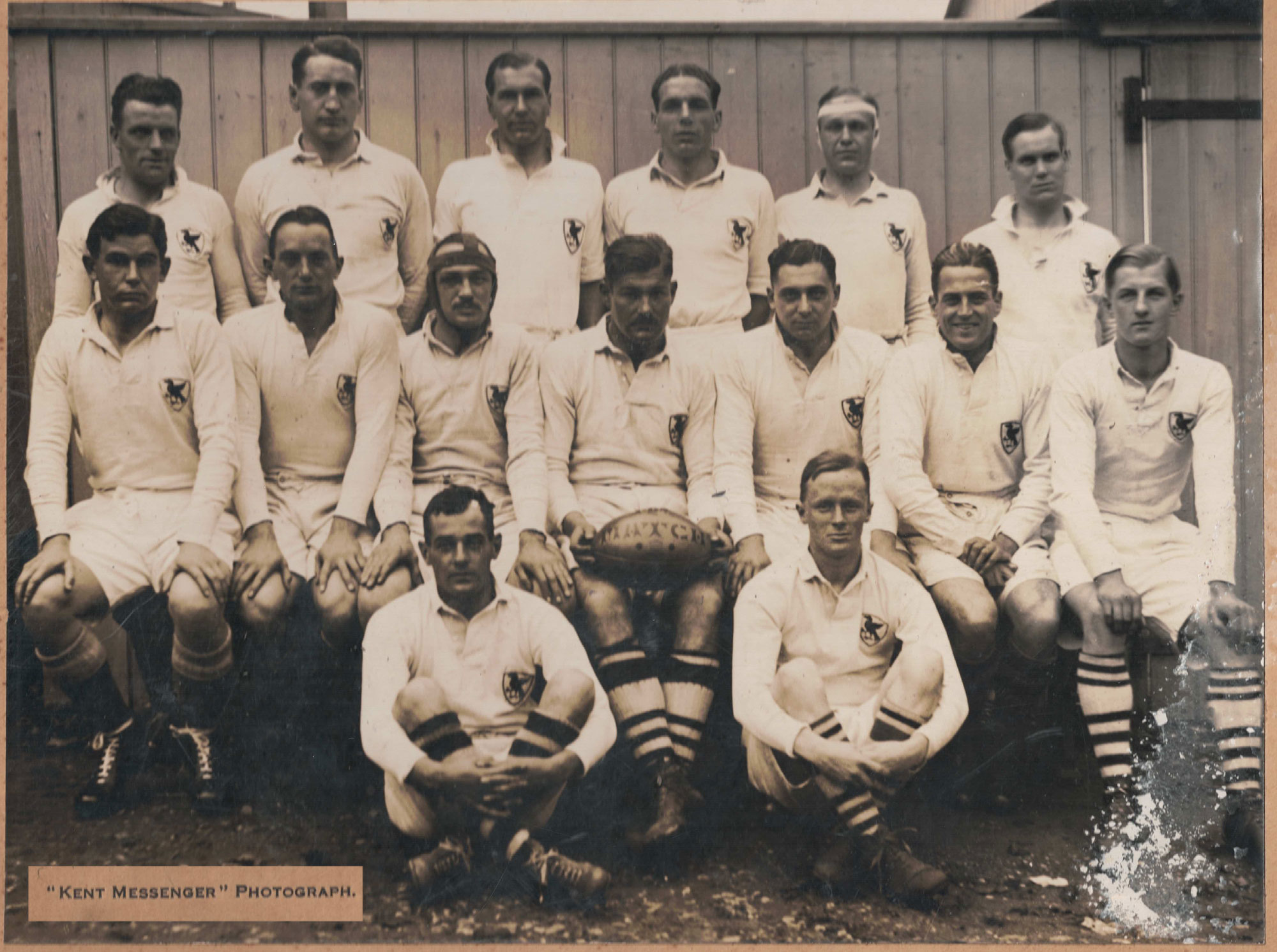
Royal Navy 1931-32 18.jpg (320803 bytes) 22.jpg (514883 bytes) 20.jpg (209967 bytes) 21.jpg (297525 bytes) 19.jpg (460170 bytes)


ARCHIVE - NEWSPAPER CUTTINGS AND OTHER INFORMATION
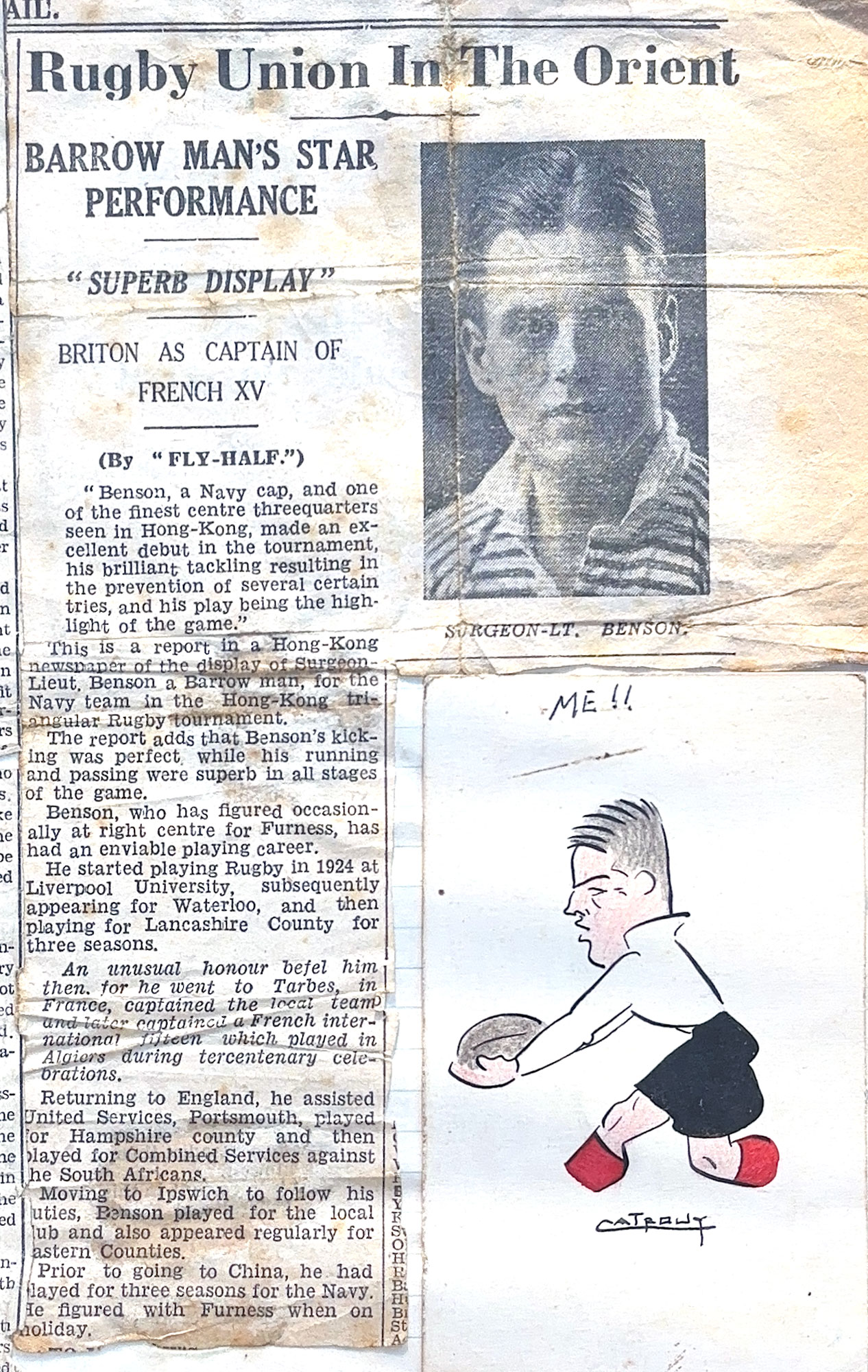
47.jpg (687418 bytes) 47 Hong Kong triangular tournament for Navy with career details
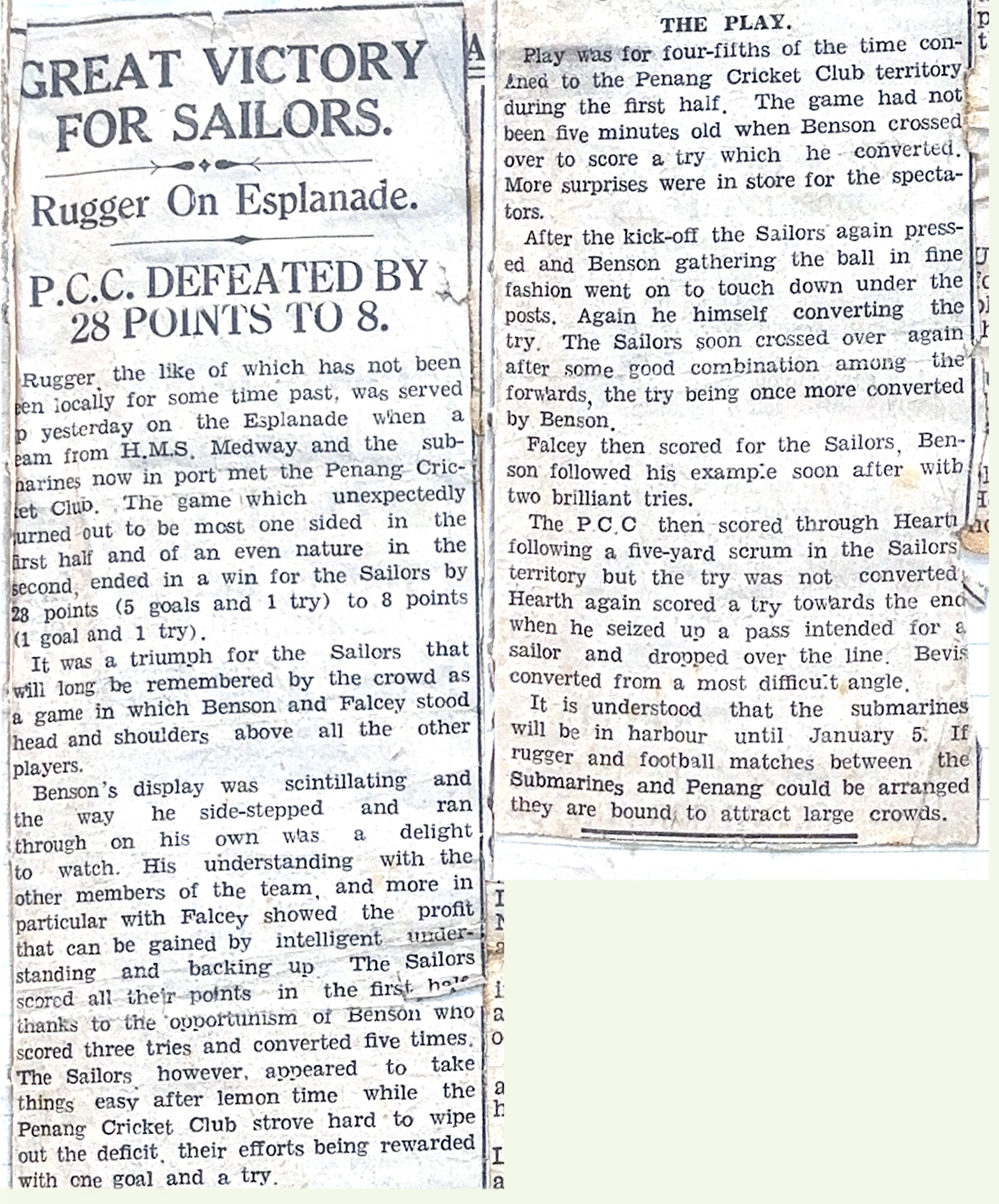
46.jpg (730367 bytes) 46 HMS Medway Navy XV v Penang Cricket Club
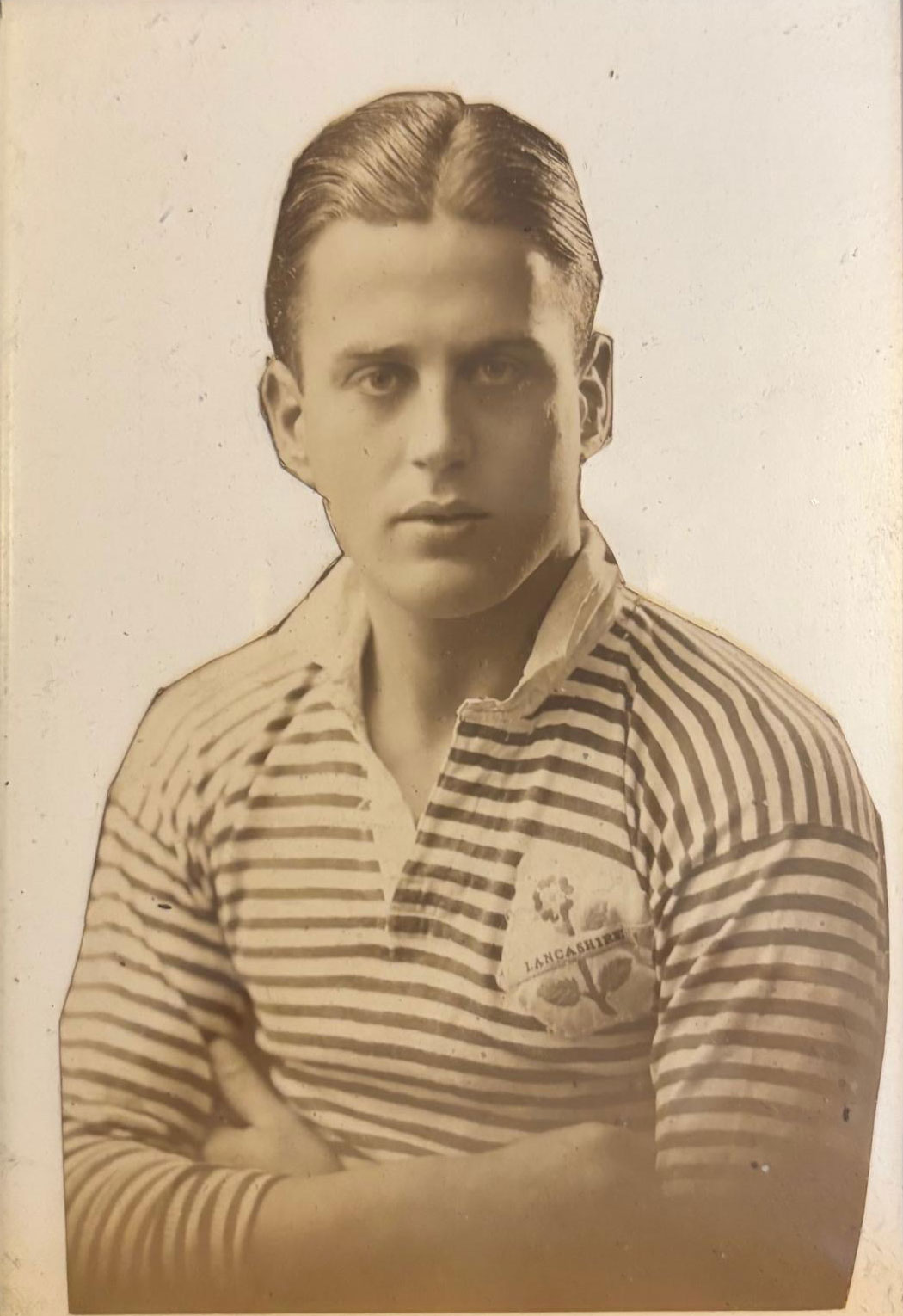
45.jpg (165374 bytes) 45 Jack Benson top half in Lancashire kit
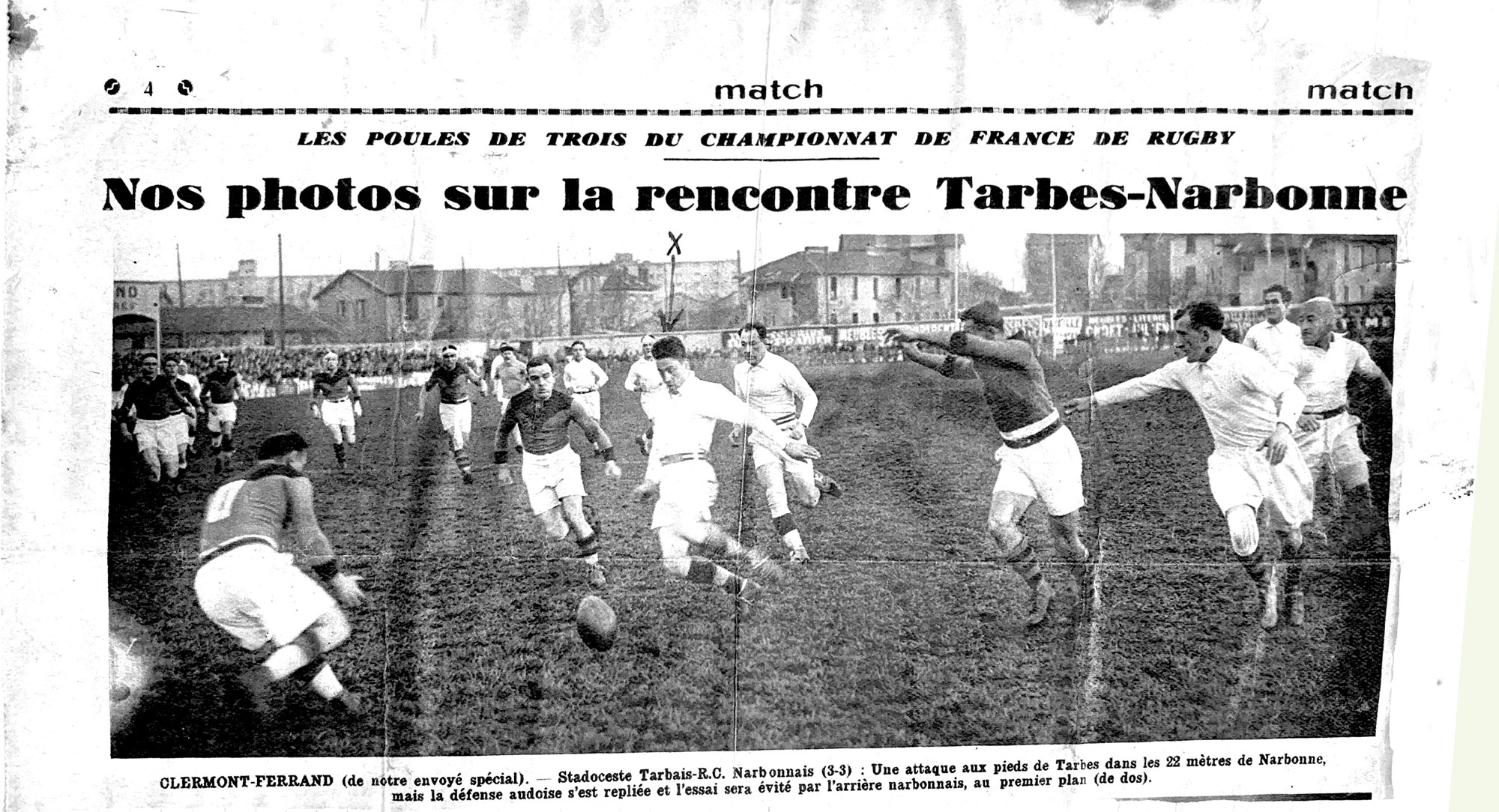
44.jpg (531721 bytes) 44 Tarbes v Narbonne - Benson about to fly kick the ball
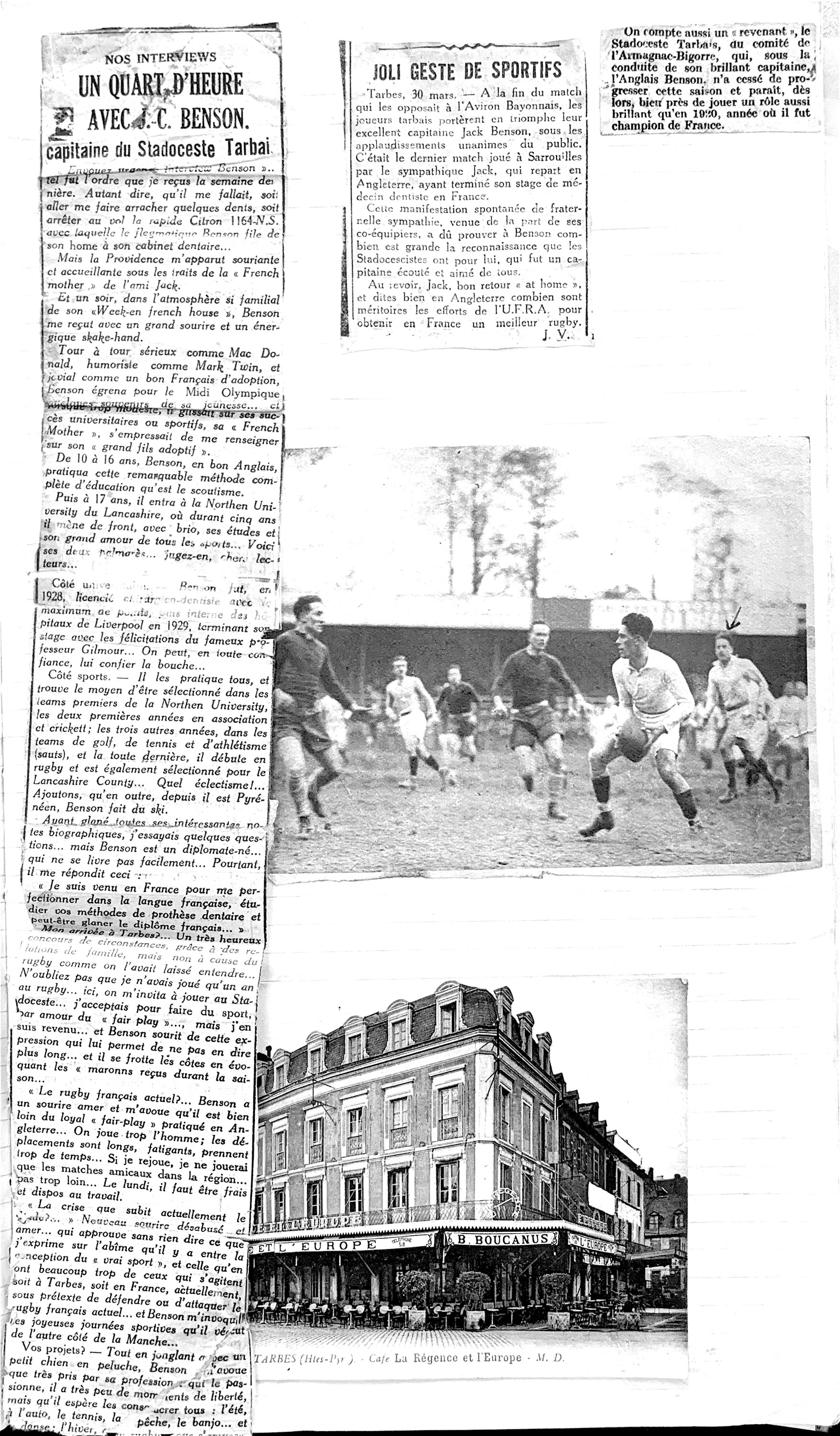
43.jpg (1137845 bytes) 43 newspaper reports of JB playing for Tarbes plus an action shot which may be against the Springboks
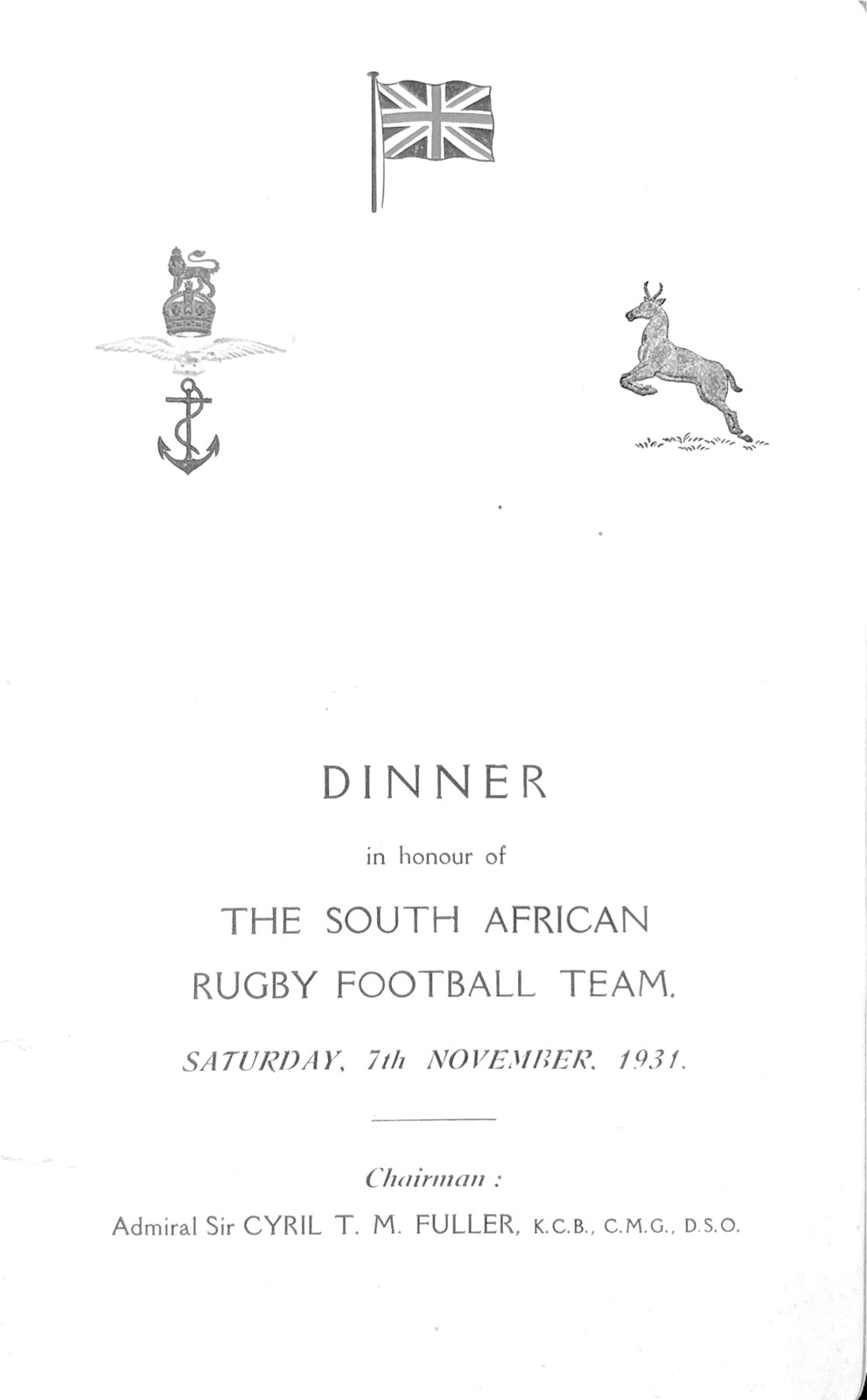
42.jpg (64531 bytes) 42 dinner menu card for Combined Services against teh Springboks in 1931
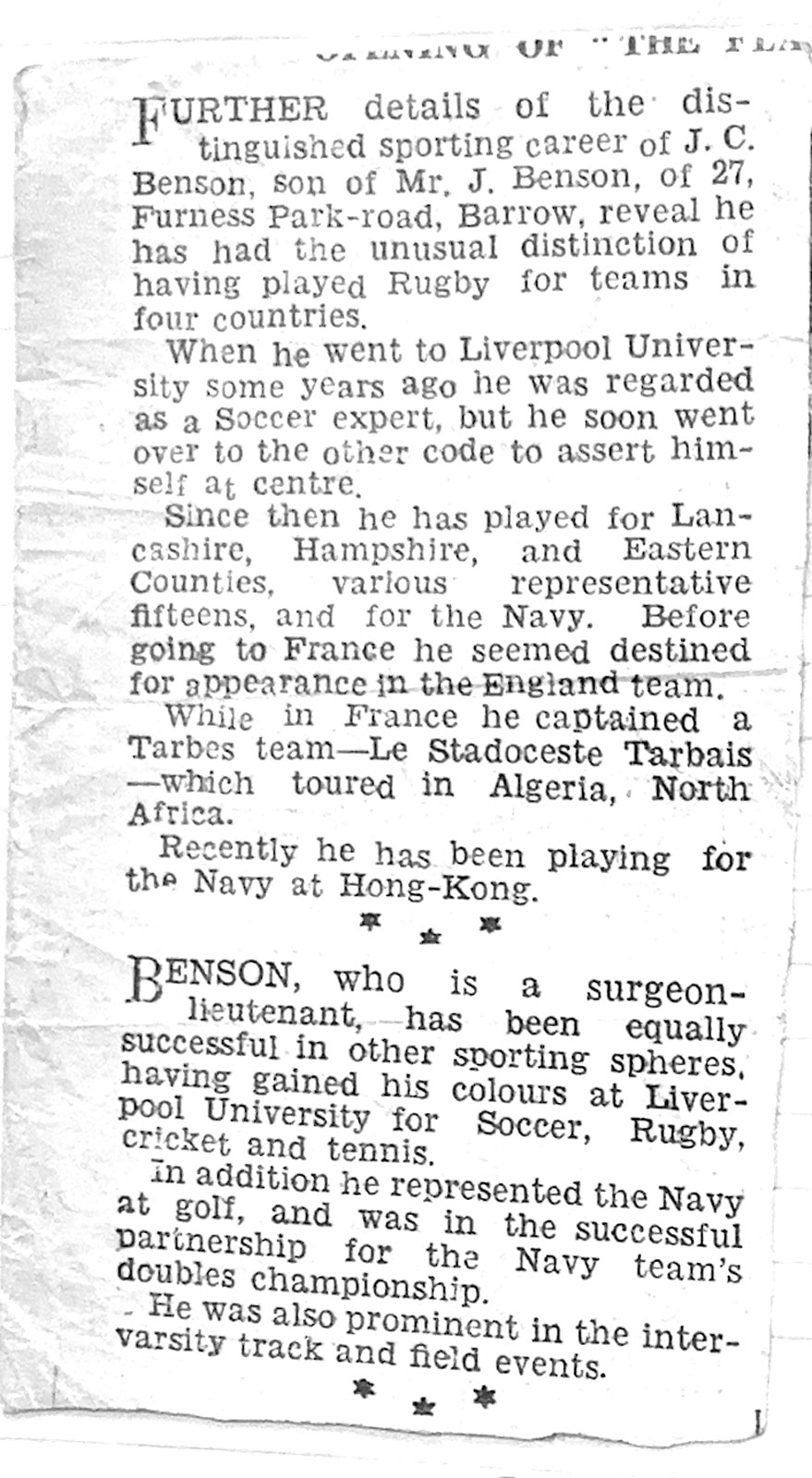
41.jpg (254253 bytes) 41 career details
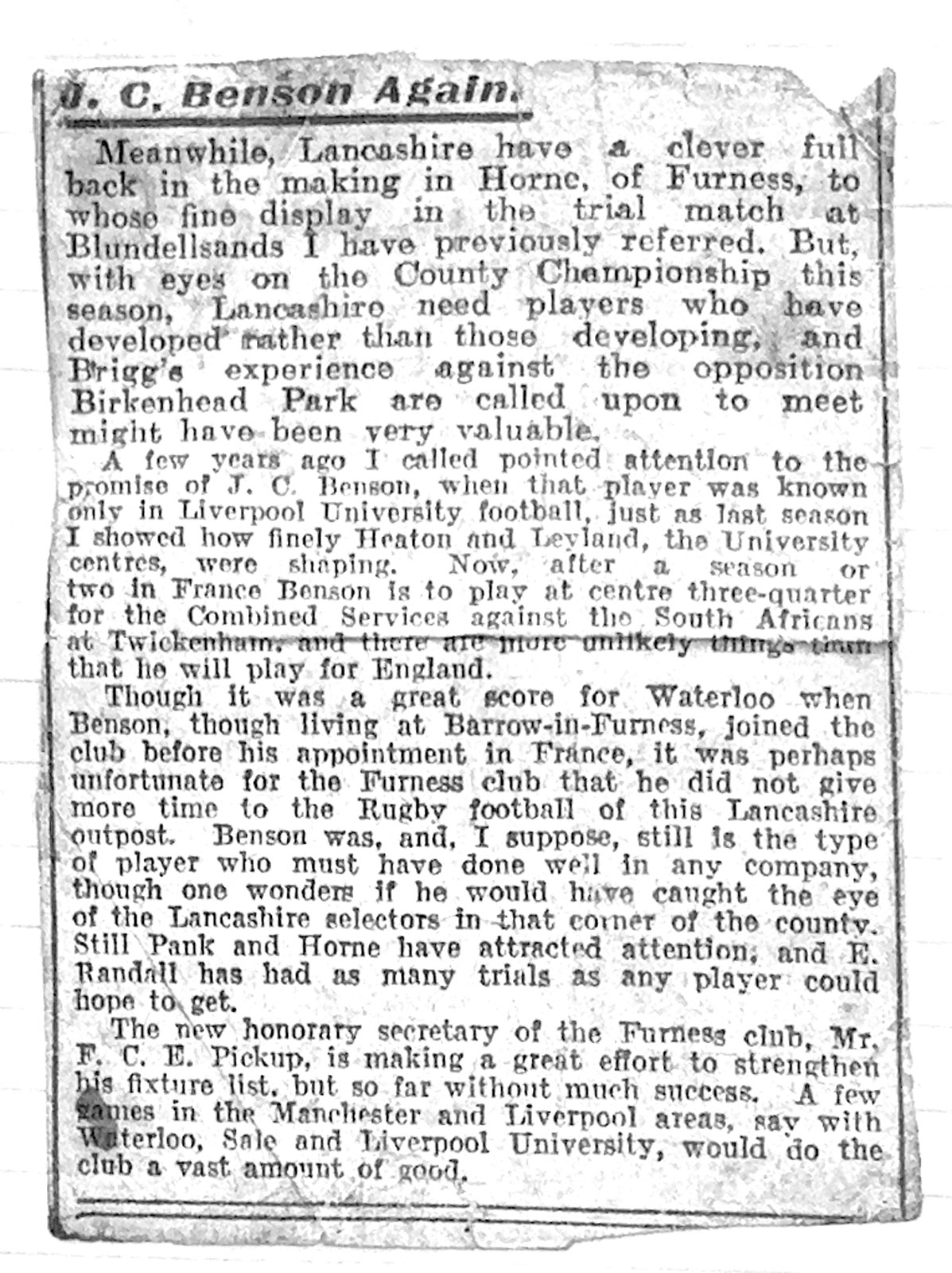
40.jpg (386705 bytes) 40 more career details - Liverpool Uni, Waterloo, 2 seasons in France
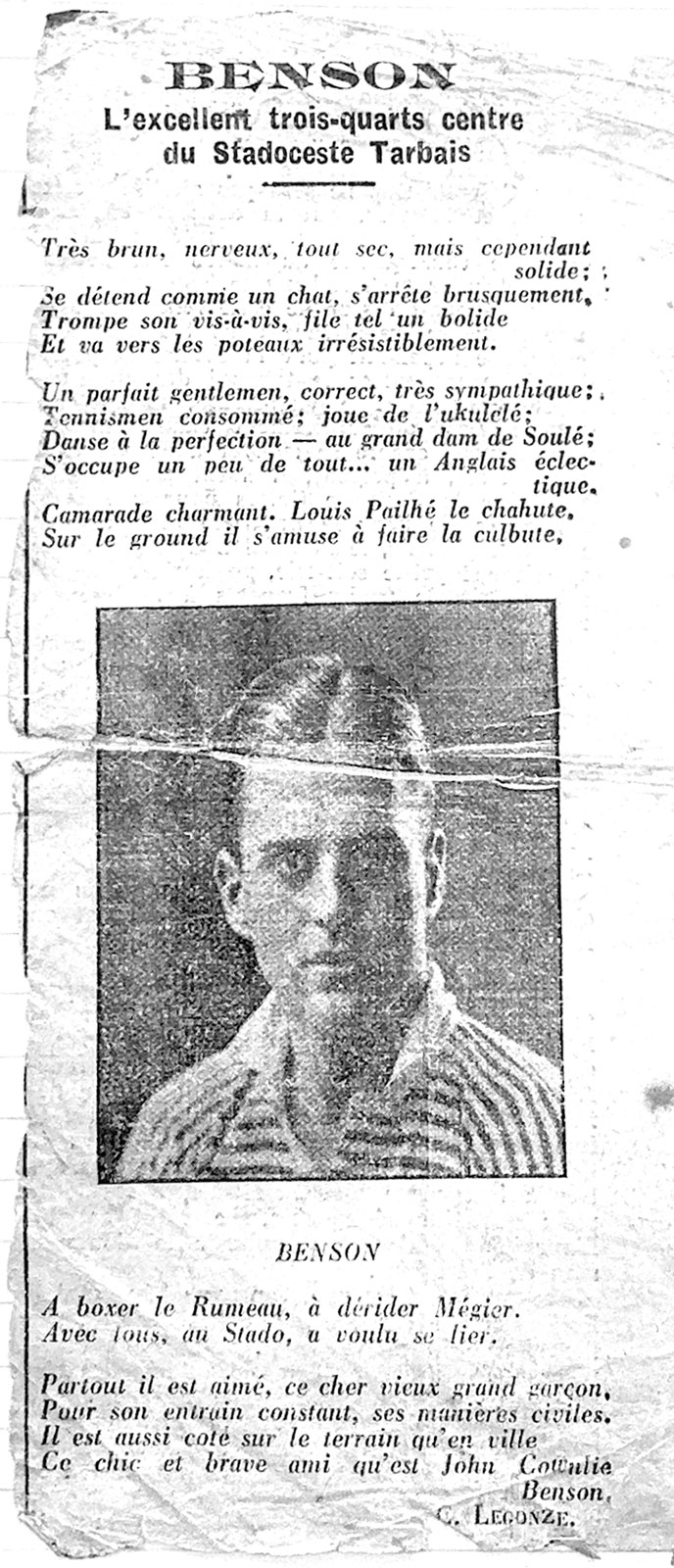
39.jpg (284480 bytes) 39 Tarbes - French report
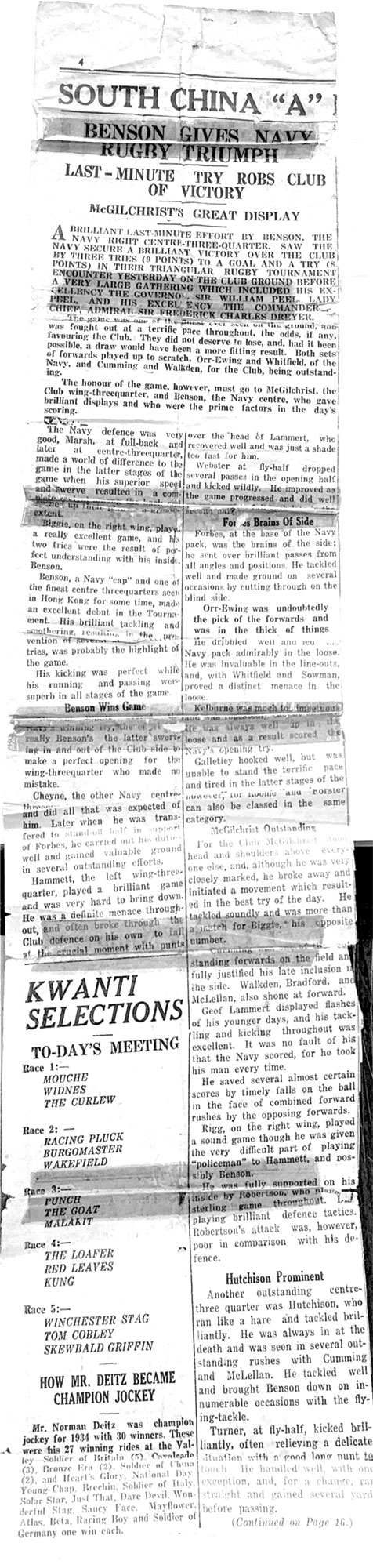
38.jpg (276512 bytes) 38 South China - Navy v Club
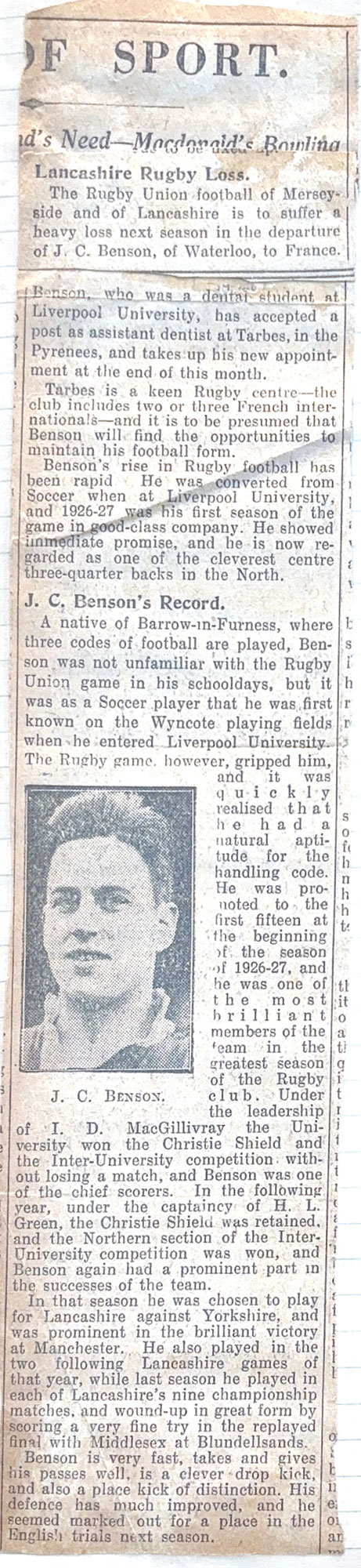
37.jpg (306538 bytes) 37 off to France
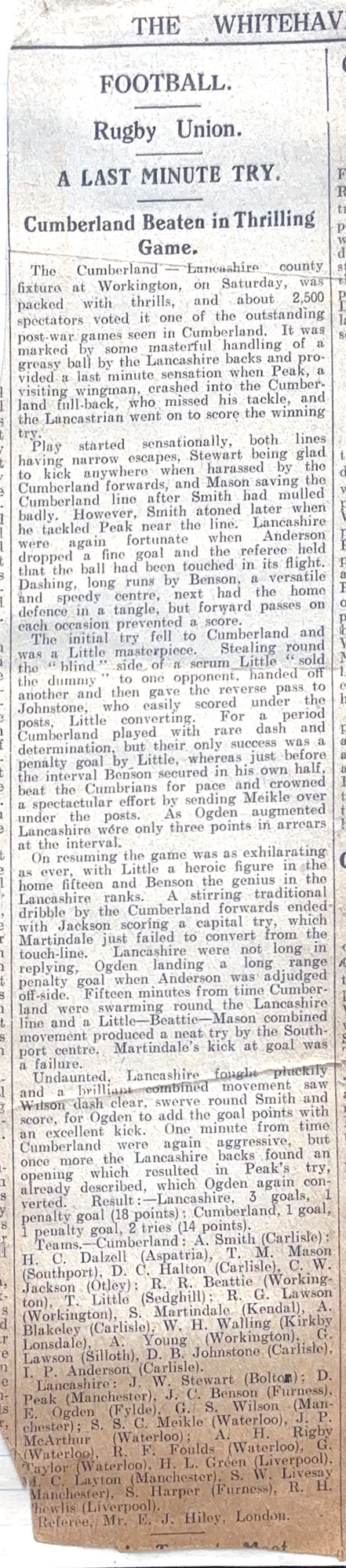
36.jpg (305490 bytes) 36 Lancashire v Cumberland
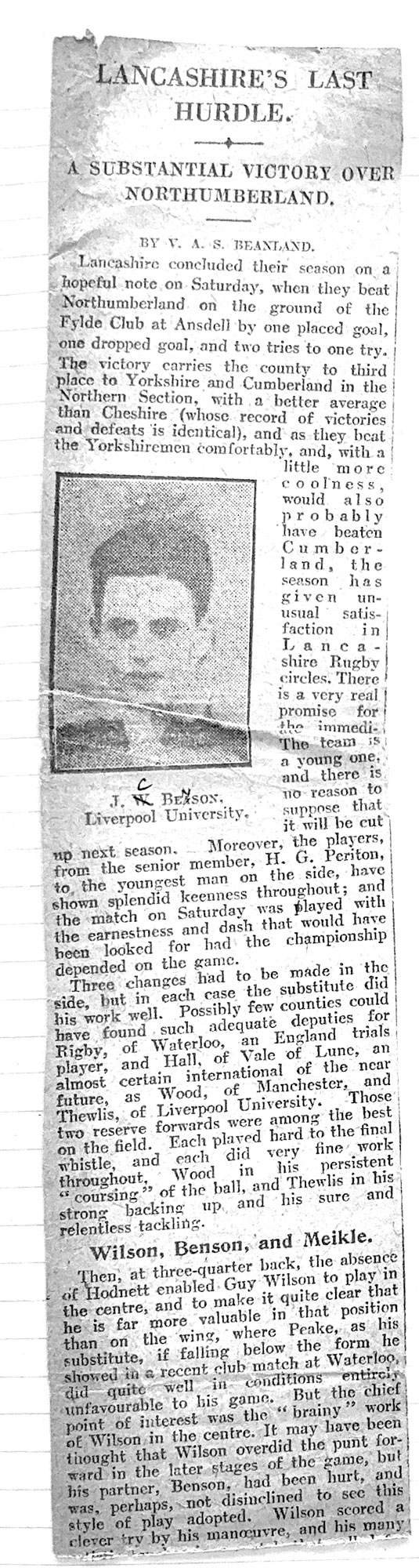
35.jpg (329998 bytes) 35 Lancashire v Northumberland
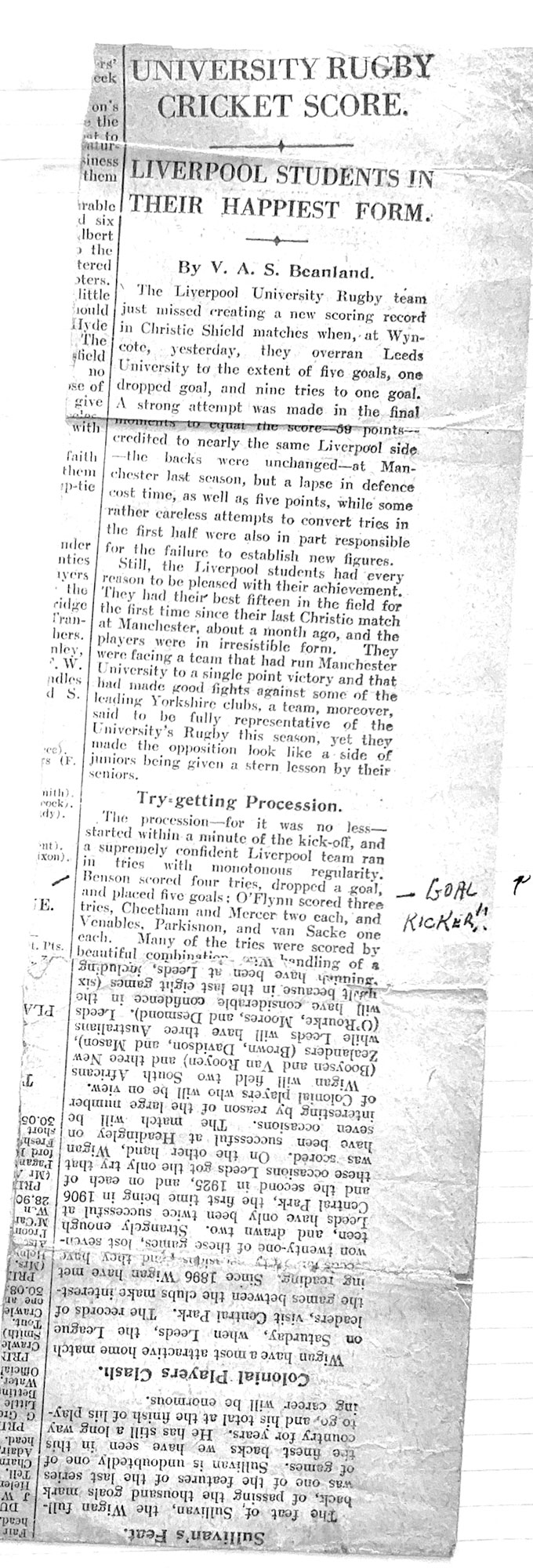
34.jpg (358594 bytes) 34 Liverpool Uni v Leeds Uni - cricket score
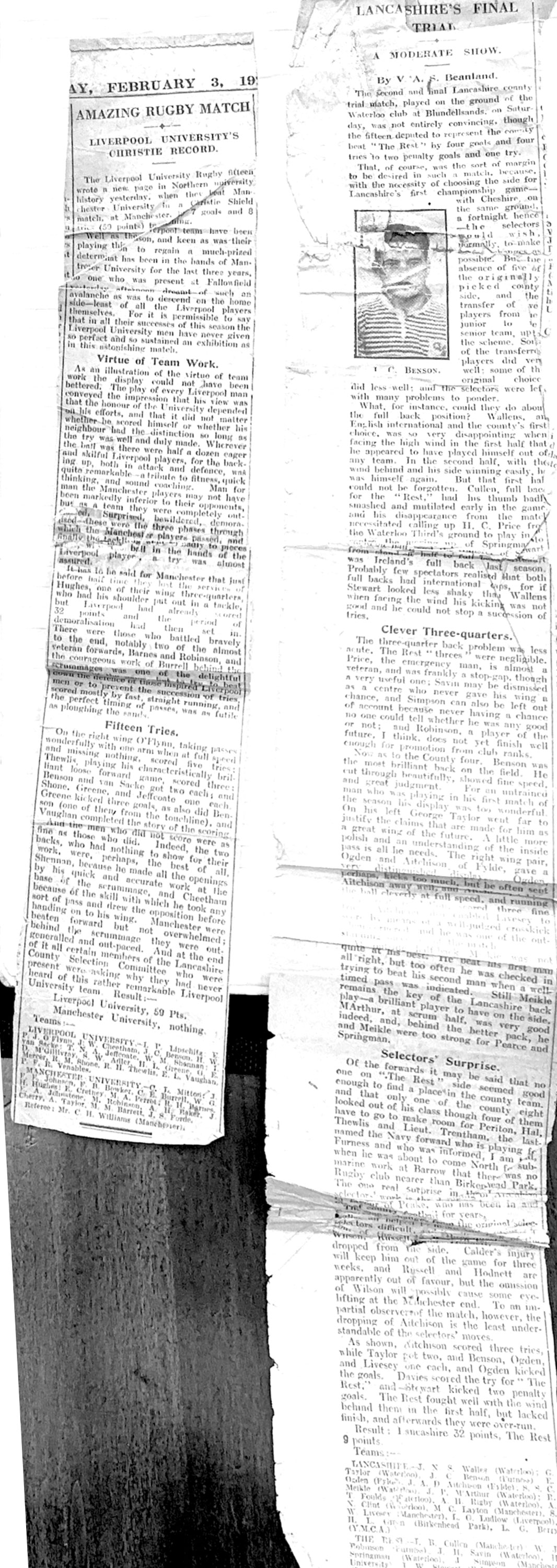
33.jpg (617757 bytes) 33 Liverpool Uni v Manchester Uni - record score & Lancashire final trial
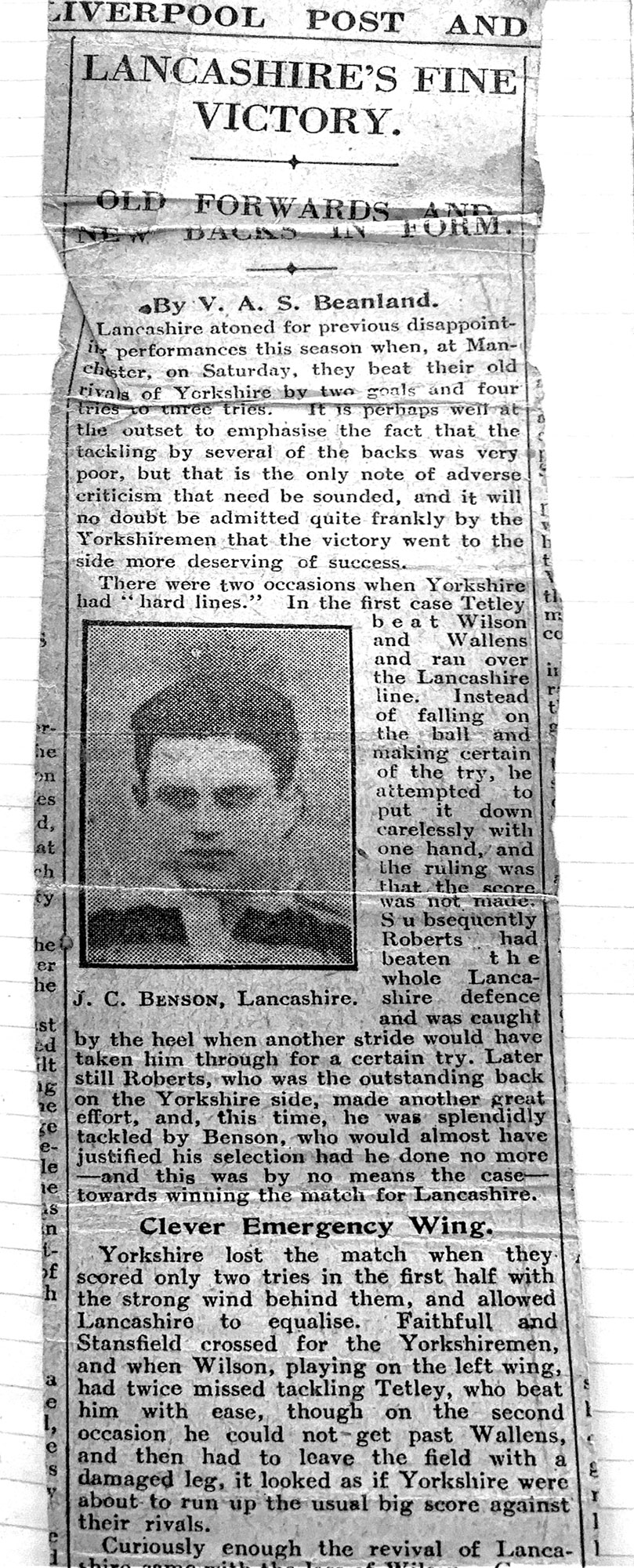
32.jpg (521293 bytes) 32 Lancashire v Yorkshire
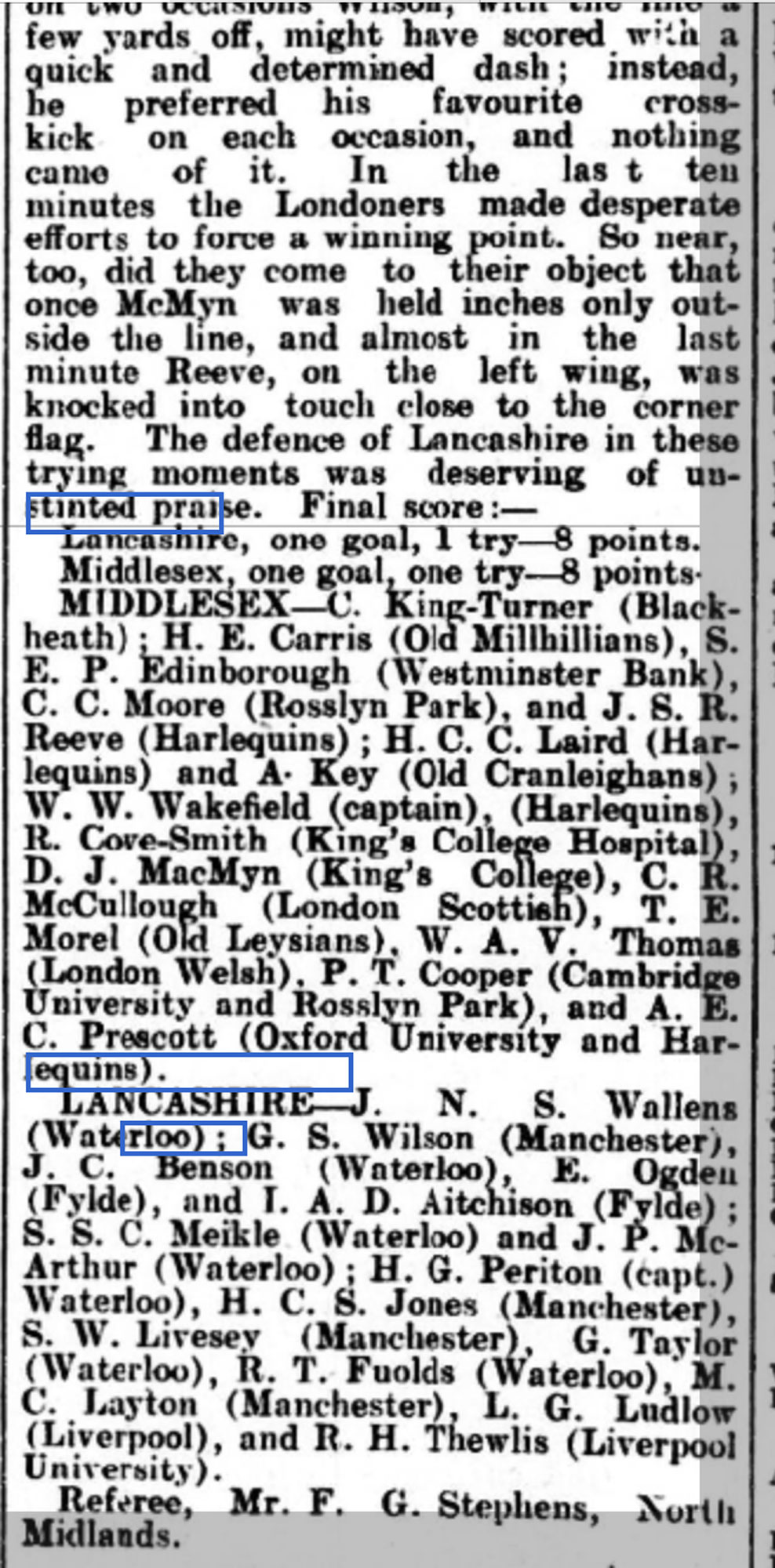
31.jpg (353474 bytes) 31 Middlesex v Lancashire -  a report by the Yorkshire Post (11th March 1929) of the RU County Final at Twickenham on Saturday 9th March, 1929 between Middlesex and Lancashire which was tied 8-8.
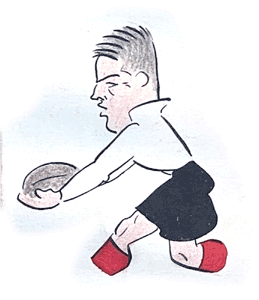
JC Benson laying off the ball to his winger who scored in the corner. Later that same year, Jack took up a post in Tarbes, France as the village/town Dentist. He developed the Tarbes Rugby team and took them on tour to North Africa as Captain.
The re-play in Lancashire soon afterwards was won by Middlesex 9-8 with Benson scoring the only try for Lancashire. 
48.jpg (192200 bytes) 48  
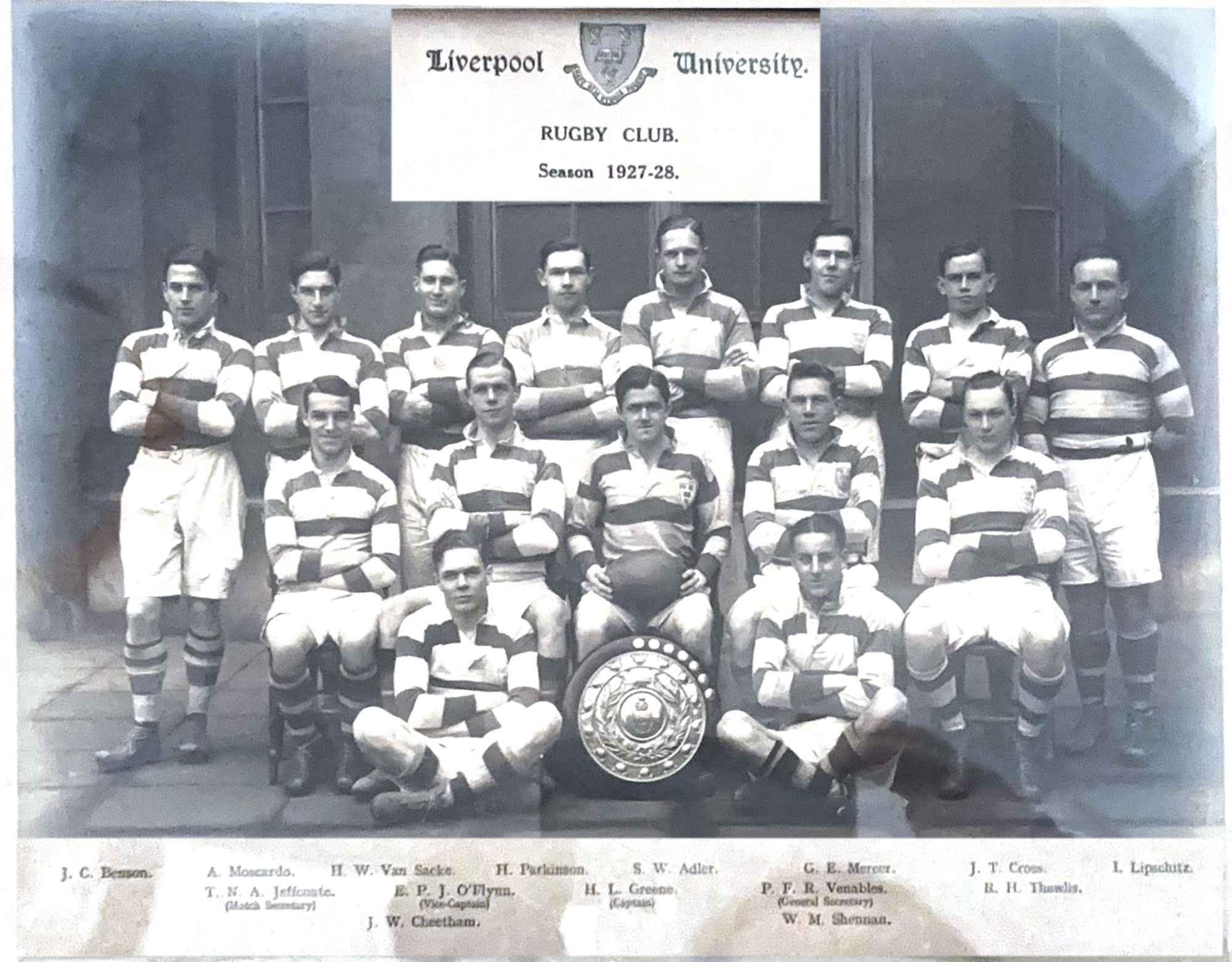
30.jpg (457107 bytes) 30 Liverpool University Rugby Club 1927-28 - JC Benson, back row far left
29.jpg (433879 bytes) 29 Eastern Counties?
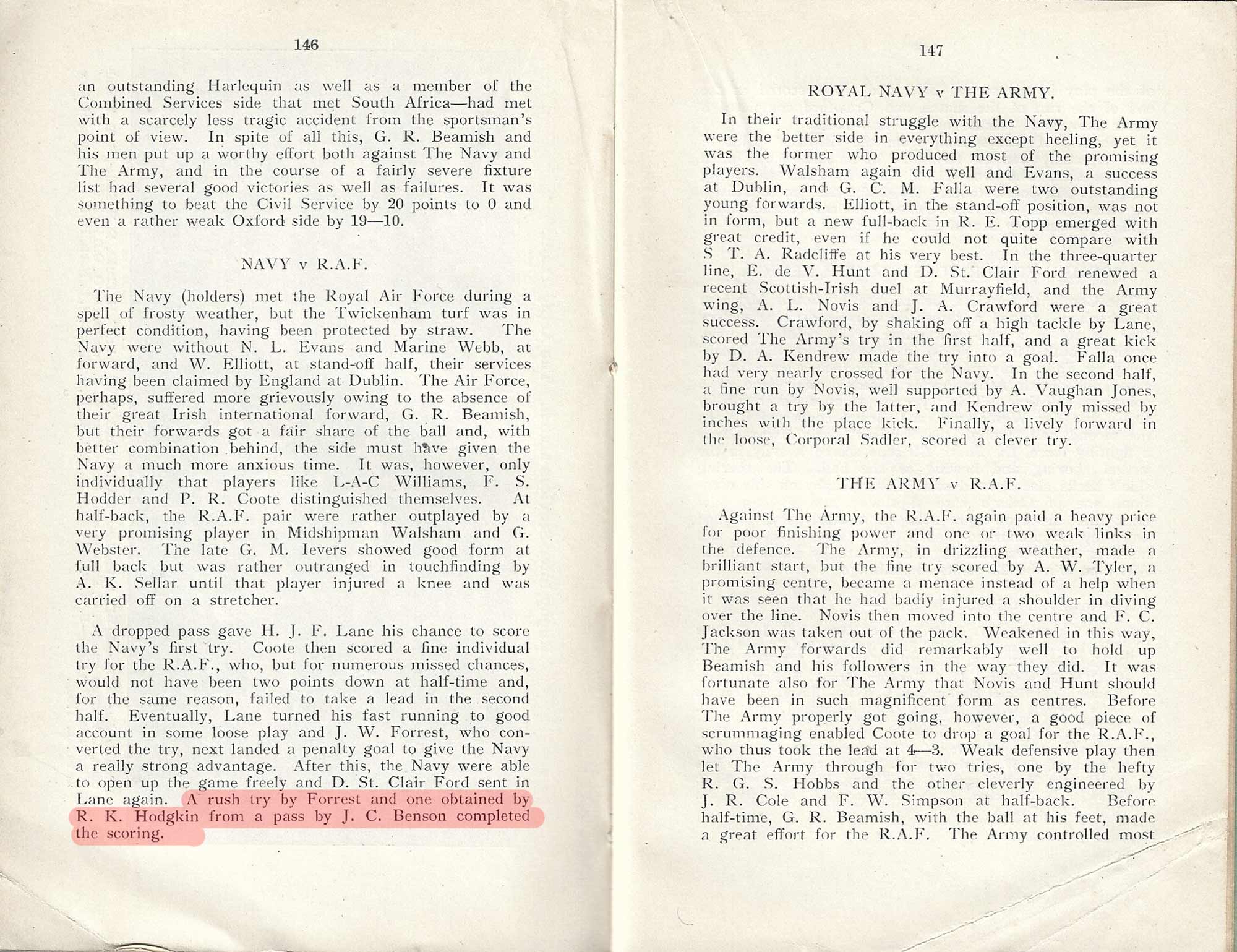
1932-33 RUGBY FOOTBALL ANNUAL -      07.jpg (395687 bytes) 28.jpg (36267 bytes) 06.jpg (290606 bytes)

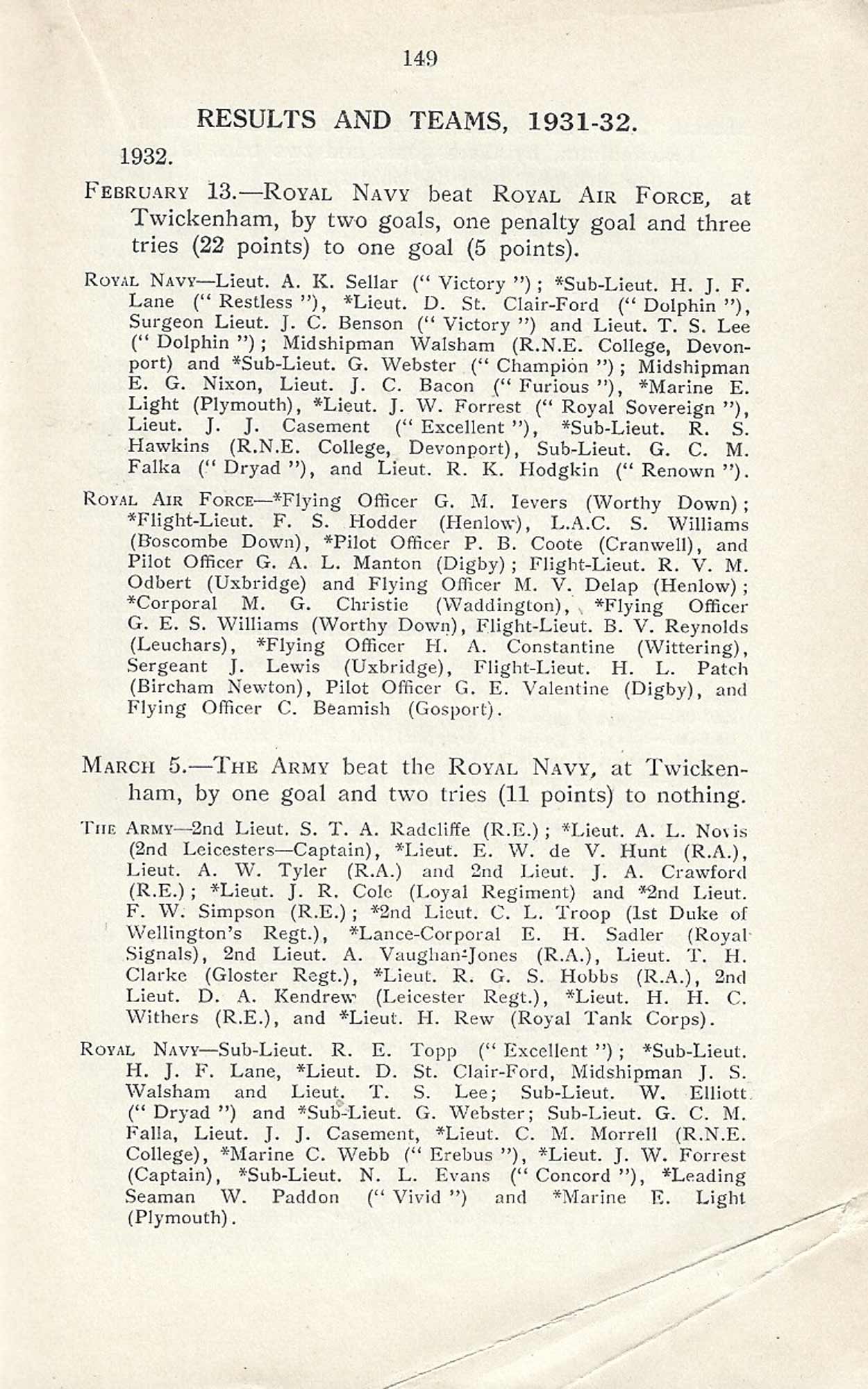
This publication contains information about the inter-services championship of 1931-32 and includes one mention of Jack in the match against the RAF at Twickenham where he completed a pass for R.K. Hodgkin to score a try. Going into the triangular tournament, the Royal Navy were defending champions, but lost their title to the Army. Jack is not shown as playing against the Army. 

1929 COUNTY CHAMPIONSHIP FINAL PROGRAMME 66.jpg (459095 bytes) VIEW CUP FINAL PROGRAMMES FOR SALE AT

RUGBY RELICS

summary record

WRM-1089-clcpgp3-benson

JC Benson Honours Cap Collection

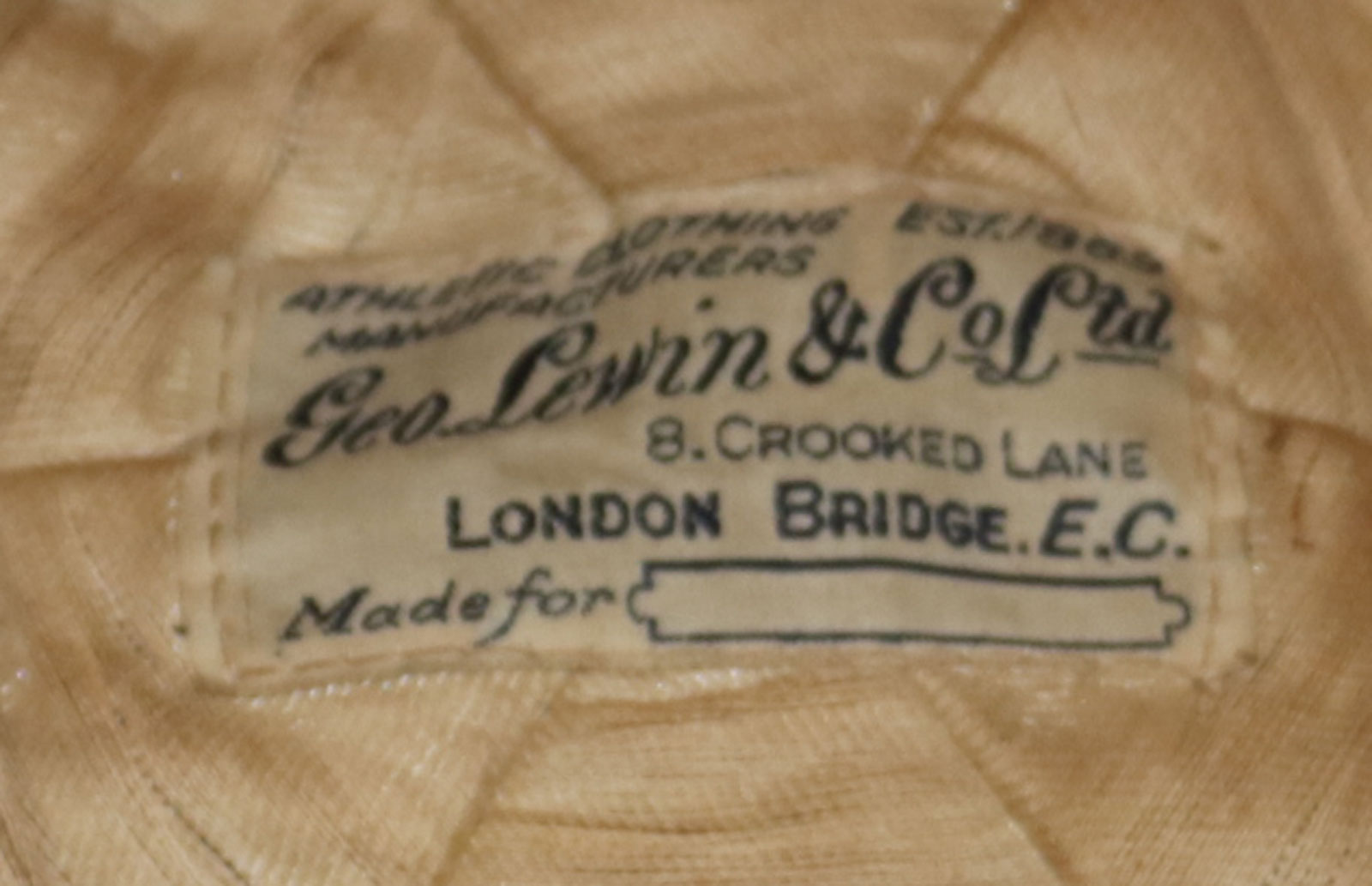
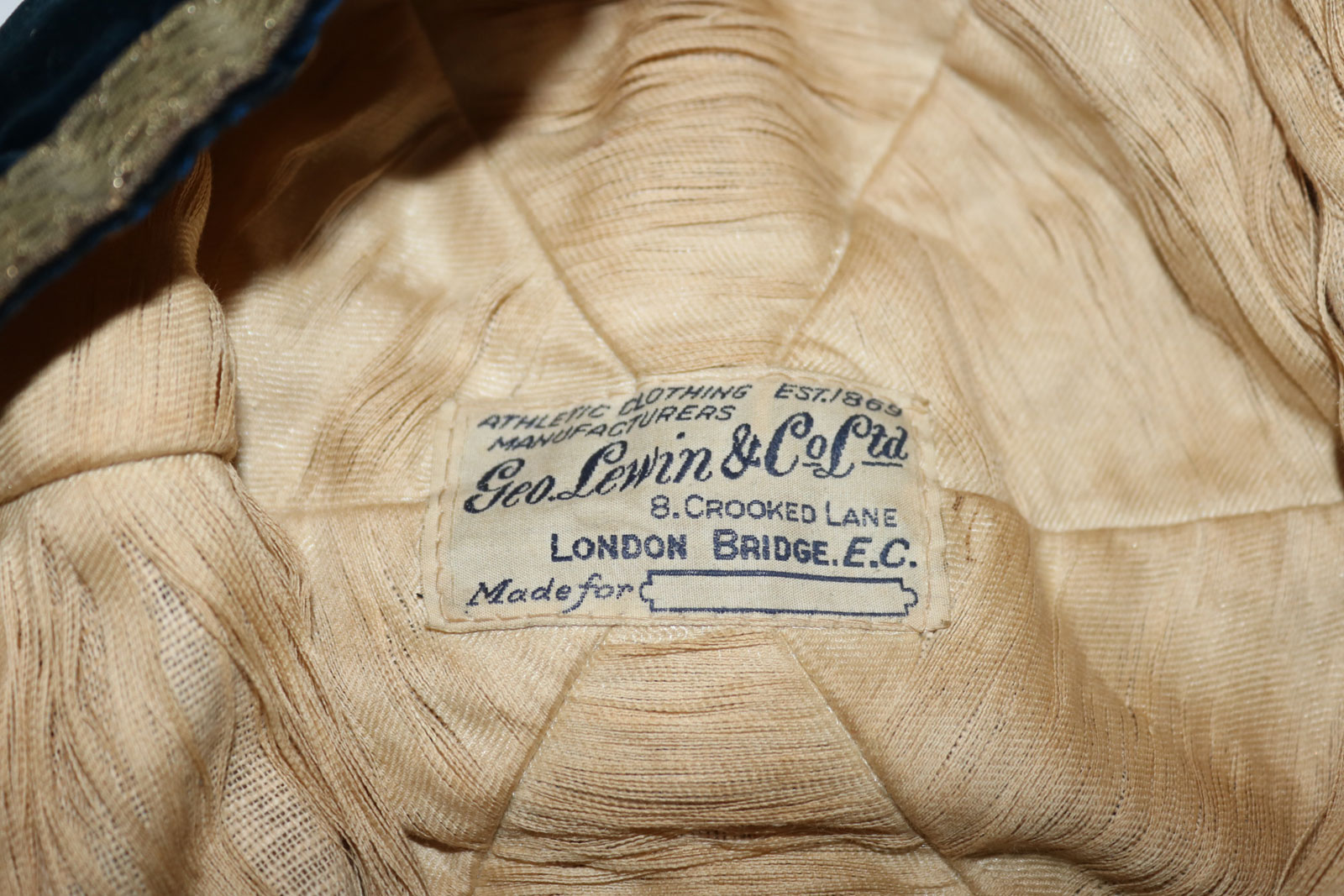
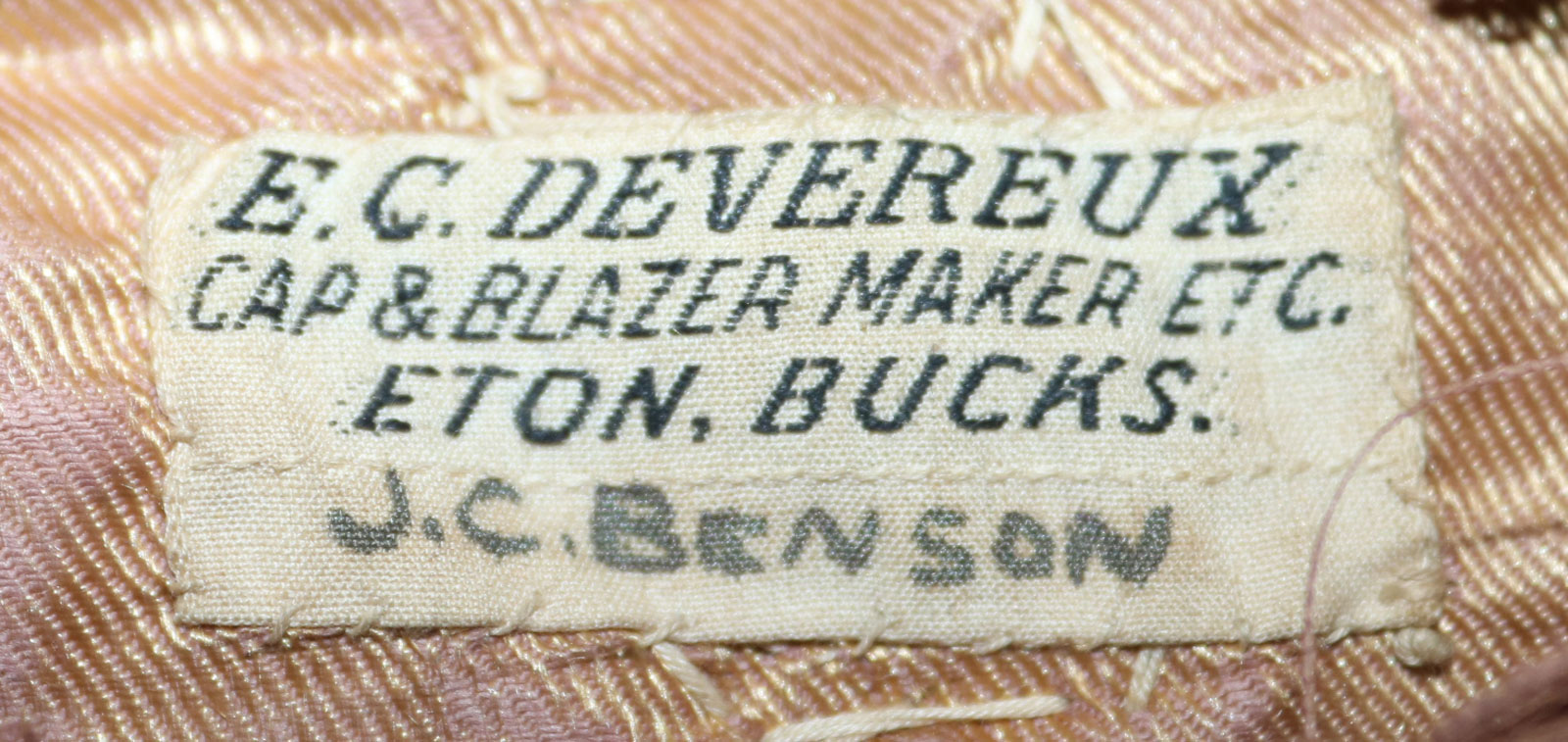
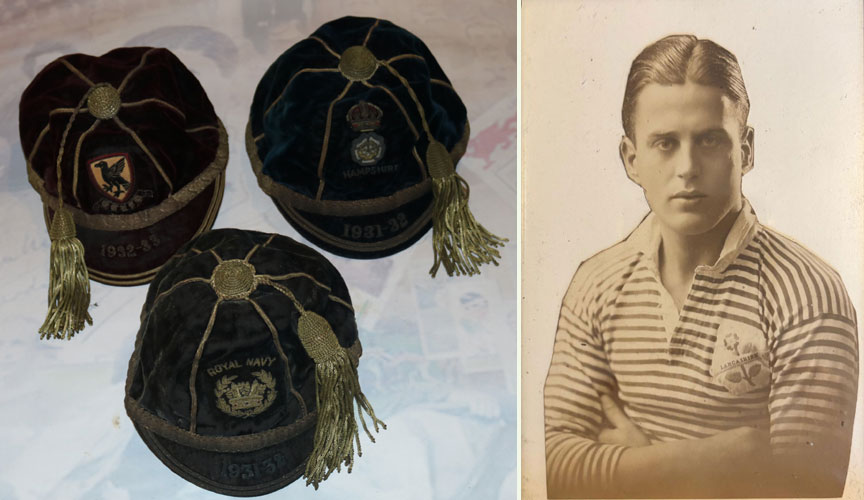
23.jpg (411562 bytes) The honours cap collection of John Cowin Benson known as Jack or JC Benson. Hampshire, Eastern Counties and Royal Navy. More details...........


CATALOGUING NOTES & REVIEWS

CATALOGUING NOTES by Dai Richards, BIOGRAPHICAL TEXT by John Griffiths, ARCHIVE INFORMATION supplied mainly by Philippa Hearld. 


RUGBY FAMILY FURTHER CATALOGUING, OPINIONS & ANALYSIS

If you have any other information, memories, stories etc that would be relevant to this page, please feel free to contact us with a view to adding it.  CONTACT INFO


Acknowledgements

Philippa Hearld, (JC granddaughter(, John Griffiths, (rugby historian), Dai Richards (World Rugby Museum),


WORLD-RUGBY-MUSEUM HOME  -  MUSEUM AT RUGBY RELICS HOME


Search the website with Google


The World-Rugby-Museum is hosted and supported by

www.rugbyrelics.com

 The World's Leading Supplier of Rugby Memorabilia